

How Barbers Lose Revenue from Visible Queues (And How to Fix It)
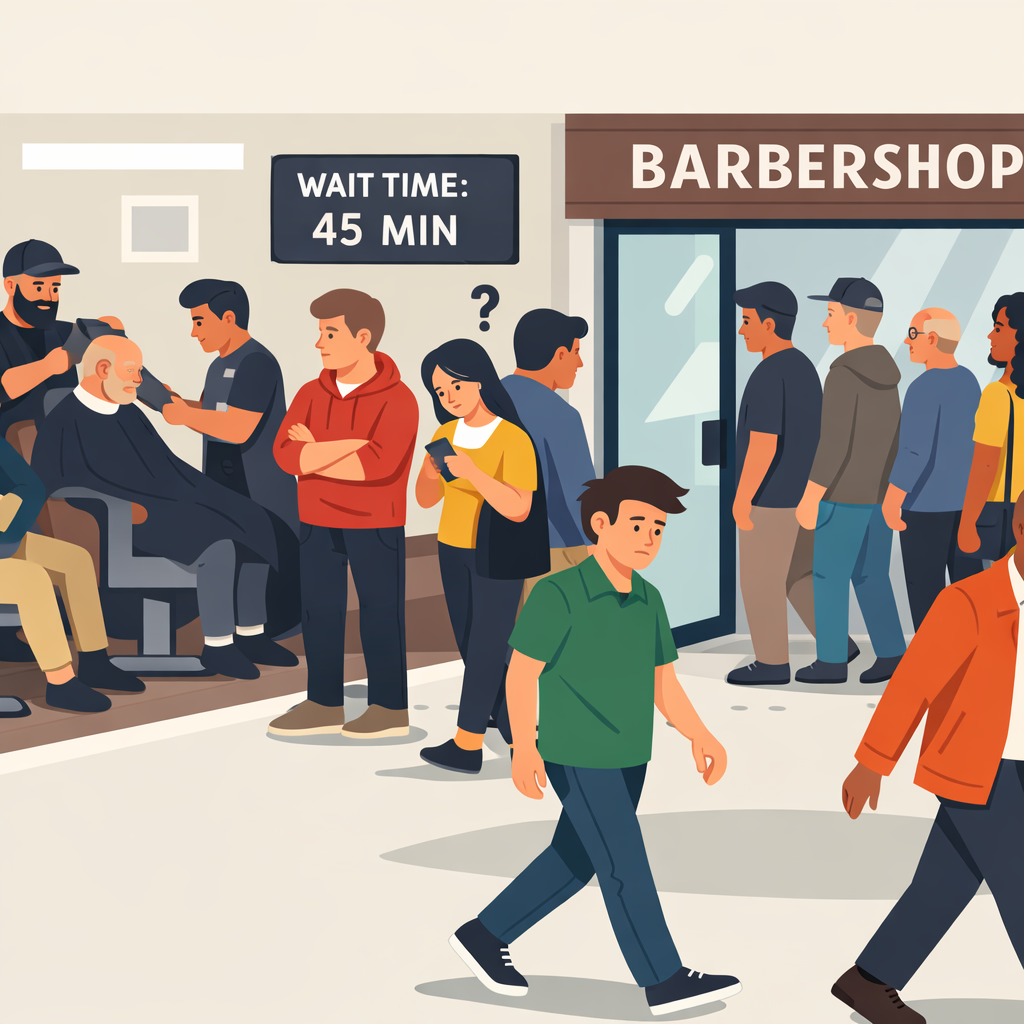
Walk past a busy barbershop on a Saturday and you’ll often see the same scene: chairs full, customers waiting along the wall, and a line forming near the door.
To the barber, that queue might look like success.
But to potential customers walking past, it often looks like a reason to leave.
Visible queues create a powerful psychological signal: “this place will take too long.” Improving barbershop waiting experience should always be in your business model.
Even if the actual wait is only 25 minutes, a crowded shop can cause new customers to walk away before they even ask.
For walk-in barbershops, this silent loss of customers represents one of the biggest hidden revenue leaks in the industry.
The Hidden Revenue Problem in Busy Barbershops
Barbers often assume long queues mean strong demand. In reality, visible waiting lines reduce conversion.
Research into retail queue behaviour shows:
• 73% of customers will abandon a queue if it appears too long
• 64% of people decide whether to join a queue within 30 seconds
• Over 50% of customers say visible waiting crowds discourage them from entering
This means the moment a customer looks through the door or window, a decision is already being made.
Not about your haircut quality.
About the wait.
The Walk-Away Customer
Imagine a typical busy Saturday.
A potential customer walks past your shop at 11:15am.
They see:
• 6 people waiting
• All chairs occupied
• Standing space filled
What they think:
“I’ll try somewhere else.”
They may come back another day.
But often, they don’t.
Many barbers lose 10–20% of potential walk-ins this way without realising it.
That’s not because the barbershop is bad.
It’s because the queue is visible.
The Psychology of Visible Waiting
Queues influence customer behaviour more than most businesses realise.
Behavioural studies show that perceived waiting time matters more than actual waiting time.
A 20-minute wait feels longer if:
• People are standing
• The shop looks crowded
• There is no clear system
• Customers cannot see their position in line
Without a structured queue system, the experience becomes uncertain.
Customers start asking:
“Who’s last?”
“How long is the wait?”
“Are you booked up?”
Uncertainty makes people uncomfortable — and uncomfortable customers often leave.
The Real Cost of Queue Abandonment
Let’s put real numbers on this.
Example barbershop:
• 4 chairs
• £22 average haircut
• 40 haircuts per day
Daily revenue:
£880
If just 6 customers per day walk away due to visible queues:
6 × £22 = £132 lost daily
Over a year:
£132 × 300 working days = £39,600 lost revenue
And that doesn’t include:
• Lost repeat customers
• Missed retail product sales
• Lower lifetime value
Visible queues quietly cost barbershops tens of thousands per year.
Why Traditional Queues Fail in Modern Barbershops
Traditional queues were designed for banks and post offices — not fast-paced walk-in services.
Barbershops face unique queue challenges:
Demand spikes
Fridays and Saturdays create sudden surges.
Limited waiting space
Shops physically cannot hold large waiting groups.
Customer impatience
Many customers are fitting haircuts into busy schedules.
Walk-in unpredictability
Unlike appointments, walk-ins arrive randomly.
Because of this, physical waiting areas become bottlenecks.
How Modern Barbershops Solve the Queue Problem
The most successful walk-in barbershops now use digital queue systems.
Instead of waiting inside the shop, customers join a virtual queue and track their position from their phone.
This transforms the entire waiting experience.
Customers can:
• Join the queue quickly
• See estimated wait times
• Leave the shop while waiting
• Return when their turn is near
This approach focuses on improving barbershop waiting experience while still keeping the walk-in model that many customers love.
A queue management system for barbershops removes the visual barrier that scares new customers away while keeping demand organised.
The Hidden Benefit: Shops Look Busy, Not Overcrowded
One of the biggest advantages of digital queues is subtle but powerful.
Instead of a crowded waiting room, the shop looks:
• busy
• efficient
• professional
Potential customers see barbers working — but not an intimidating queue.
This increases the chance they walk in and join.
Shops appear popular rather than overwhelmed.
Better Customer Experience = Higher Revenue
When the queue becomes organised and transparent:
Customers feel:
• less rushed
• more informed
• more comfortable waiting
Barbers benefit from:
• fewer queue arguments
• better workflow
• smoother peak hours
And importantly:
more customers stay instead of leaving.
Why Walk-In Barbershops Are Moving Toward Digital Queues
Appointment systems work well for salons, but many barbershops prefer the spontaneity of walk-ins.
Digital queues preserve that model while solving the waiting problem.
They allow barbershops to:
• maintain walk-in culture
• reduce visible queues
• handle busy periods calmly
• improve customer flow
This is why queue systems are becoming standard tools for modern barbershops.
The Future of Barbershop Queues
Customer expectations are changing.
People already track wait times for:
• restaurants
• taxis
• deliveries
• theme parks
Waiting blindly inside a crowded shop is quickly becoming outdated.
Barbershops that modernise their queue experience gain a competitive advantage.
Those that don't risk losing customers before they even sit down.
Conclusion
Visible queues may look like success, but they often hide lost revenue.
Customers walking past make quick decisions based on what they see. A crowded waiting area can silently push potential clients toward competitors.
By focusing on improving barbershop waiting experience, shops can keep their walk-in culture while removing the barriers that drive customers away.
For busy barbershops, managing the queue properly isn’t just about organisation.
It’s about protecting revenue.
FAQ Section
Do visible queues actually drive customers away from barbershops?
Yes. Studies show most customers decide whether to join a queue within seconds. If the wait appears too long or the shop looks crowded, many customers will leave.
Why do barbershops struggle with traditional queues?
Barbershops often experience unpredictable walk-in demand and limited waiting space. Physical queues can quickly become crowded and discourage new customers from entering.
What is the best way to manage walk-in queues?
Many modern barbershops use digital queue systems that allow customers to join the queue remotely and track their position from their phone.
Can digital queues increase barbershop revenue?
Yes. By reducing queue abandonment and improving customer flow, barbershops can retain more walk-ins and increase daily haircut volume.