

US Customer Experience Statistics (2026): Waiting Times, Queues & Customer Behavior
Waiting is one of the most critical — and most underestimated — factors in customer experience.
Across the United States, businesses are losing customers, revenue, and loyalty simply because people don’t want to stand in line.
This article breaks down the latest US customer experience statistics related to waiting times, queue behavior, and how delays impact satisfaction, spending, and retention.
How Long Will Americans Wait?
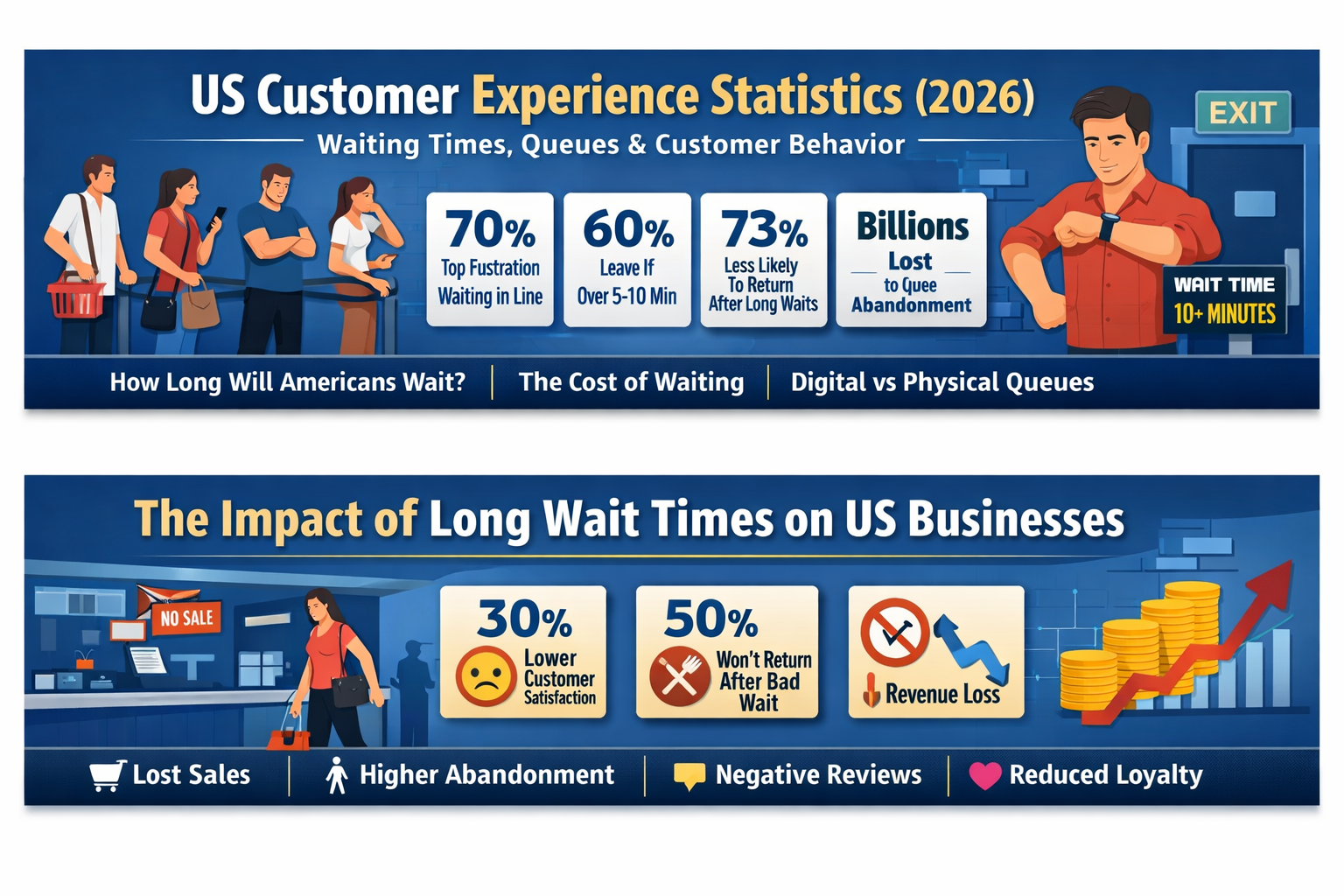
70% of Americans say waiting in line is their top frustration in customer experience
60% will abandon a queue if the wait exceeds 5–10 minutes
80% expect service within 10 minutes or less
Nearly 1 in 3 customers leave without purchasing due to long wait times
This shows a clear pattern:
Your queue is either converting customers — or actively losing them.
The Cost of Waiting on Businesses
Waiting doesn’t just frustrate customers — it directly impacts revenue.
US retailers lose billions annually due to queue abandonment
73% of customers say long waits reduce their likelihood of returning
67% say waiting negatively affects their perception of a brand
Businesses with long queues see up to 30% lower customer satisfaction scores
For high-footfall businesses like retail, hospitality, and healthcare, queues are not just operational — they’re financial risks.
Queue Psychology: Why Waiting Feels Worse Than It Is
Research into customer behaviour reveals something important:
Unoccupied time feels longer than occupied time
Uncertainty increases perceived wait time
Visible queues discourage entry (even if fast-moving)
This means:
A 10-minute unknown wait feels worse than a 15-minute managed wait
Customers prefer knowing their position over standing blindly in line
This is where virtual queues outperform physical queues
Digital vs Physical Queues (US Trends)
65% of US consumers prefer digital or virtual queues when available
Text or app notifications increase satisfaction by up to 40%
Businesses using queue systems report:
Up to 50% reduction in crowding
Shorter perceived wait times
Higher conversion rates
Digital queues don’t just reduce friction — they transform the waiting experience entirely.
How Waiting Impacts Spending
Customers are far less likely to browse or upsell when queues are visible
Impulse purchases drop significantly when wait times increase
Long queues reduce average order value (AOV)
Businesses with smoother queue experiences see higher basket sizes
In simple terms:
Better queues = more revenue per customer
Industry Breakdown (US)
Retail
Peak queues cause abandonment rates of 20–40%
Checkout speed is a top 3 factor in store satisfaction
Hospitality
Waiting time is the #1 complaint in restaurants
50% of guests won’t return after a poor wait experience
Healthcare
Long waiting rooms reduce patient satisfaction significantly
Digital check-in improves experience and perceived professionalism
What This Means for US Businesses
The data is clear:
Customers expect speed
They demand visibility
And they reward convenience
Businesses that fail to manage queues effectively risk:
Lost revenue
Poor reviews
Reduced repeat visits
The Solution: Queue Management Systems
Modern queue management systems (like QueueAway) solve this by:
Letting customers join remotely via QR code or link
Showing live queue position and estimated wait time
Sending notifications when it’s their turn
Reducing crowding and frustration
This isn’t just convenience — it’s competitive advantage
Related Reading (Internal Linking for SEO)
How Long Americans Will Wait in Line
Average Wait Times in US Retail (2026)
Queue Management System for US Businesses
Virtual Queue App: Complete Guide
FAQ
What is the average wait time customers tolerate in the US?
Most customers expect service within 10 minutes, with many abandoning queues after 5–10 minutes.
How do queues impact customer experience?
Queues significantly affect satisfaction, brand perception, and likelihood of return.
Do virtual queues improve customer experience?
Yes, virtual queues reduce perceived wait times and improve satisfaction by providing visibility and flexibility.
How much revenue is lost due to long queues?
US businesses lose billions annually due to queue abandonment and reduced customer spending.