

Barbershop Statistics (2026): Global Industry Data, Waiting Times & Customer Behaviour
Introduction
Barbershops operate at the intersection of service speed, customer experience, and walk-in demand. Unlike appointment-driven industries, many barbershops still rely heavily on queues — making waiting time one of the biggest hidden factors affecting revenue. This is idea for a queue management system for barbershops
Globally, the haircare and barbering industry continues to grow, but customer expectations are evolving faster than ever. Today’s customers expect speed, transparency, and flexibility, and long or unclear wait times are one of the biggest reasons they leave without a haircut.
This page breaks down the most important global barbershop statistics, including market size, waiting behaviour, customer expectations, and how modern queue systems are changing the industry.
Global Barbershop Industry Statistics
1. The global haircare market exceeds $90 billion
The global haircare market is valued at over $90 billion, with steady growth driven by grooming trends, personal care awareness, and male grooming demand.
Barbershops are a key part of this ecosystem, especially in urban areas where regular grooming is part of lifestyle.
2. The men’s grooming market is rapidly growing
The global men’s grooming market is projected to exceed $115 billion by 2028, driven by:
Increased grooming awareness
Social media influence
More frequent haircut routines
This means more visits per customer, increasing pressure on queues and wait times.
3. Barbershops are growing globally
Across the UK, US, and Europe, the number of barbershops has increased significantly over the past decade.
UK: Strong high-street growth
US: Barbershop revival culture
Europe: Expansion of premium grooming brands
More shops = more competition = customer experience becomes the differentiator
Barbershop Waiting Time Statistics
4. 70%+ of customers say waiting impacts their experience
Customer experience studies consistently show that waiting time is one of the top 3 factors affecting satisfaction in service businesses.
In barbershops, waiting is often the first impression.
5. Customers overestimate wait times by up to 36%
Research into queue psychology shows that people perceive waits to be significantly longer than they actually are when:
There is no information
No visible progress
No estimated wait time
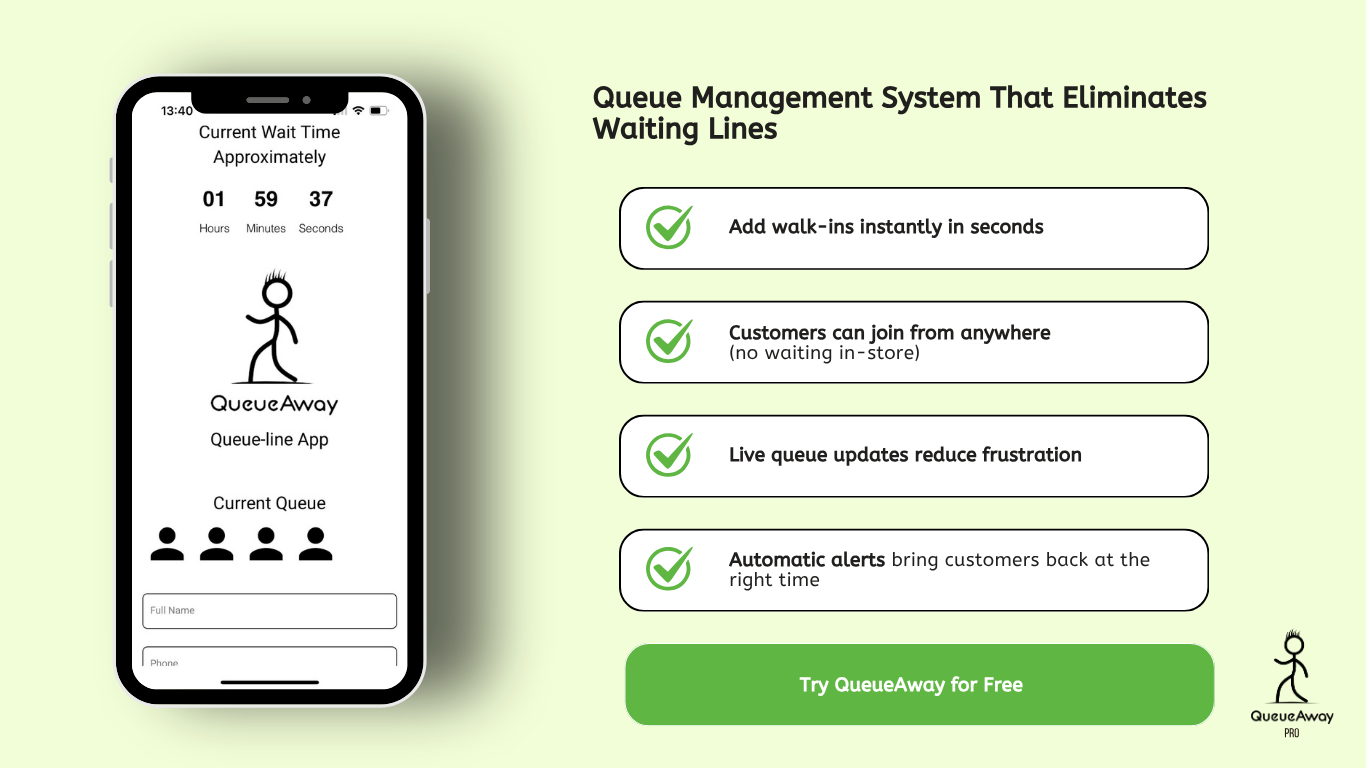
This is exactly how traditional barbershop queues operate. A virtual queue app allows customers to track their position and return at the right time.
6. Unclear queues increase walk-outs
When customers:
Don’t know how long the wait is
Can’t see their position
Feel the queue isn’t moving
They are far more likely to leave.
This directly impacts daily revenue.
Walk-Out & Revenue Impact Statistics
7. Up to 30% of customers will abandon a queue
Across service industries, studies suggest that up to 30% of customers leave when waits are too long or unclear or there is not a barber queue system
In a barbershop, this is lost revenue that already walked through the door.
8. Long waits directly reduce repeat visits
Customers who experience:
Long waits
Poor communication
Disorganised queues
Are significantly less likely to return.
Loyalty in barbershops is fragile — convenience matters as much as the haircut.
Digital Queue & Behaviour Statistics
9. 54% of customers will wait longer in a virtual queue
Research shows that over half of customers are willing to wait longer if they don’t have to stand in line.
This is a huge shift in behaviour.
10. 60%+ prefer real-time updates while waiting
Customers want:
Position in queue
Estimated wait time
Notifications when it’s their turn
Without this, the wait feels longer and more frustrating.
11. Mobile-first experiences are now expected
Modern customers expect:
No app downloads like our virtual waiting room
Instant access via QR code or link
Live updates on their phone
This is exactly where barbershops are evolving.
What This Means for Barbershops
The data points to one clear shift:
The haircut is no longer the only product — the waiting experience is part of it
Barbershops that:
Reduce physical queues
Improve transparency
Let customers wait flexibly
Are seeing:
Fewer walk-outs
Higher satisfaction
More repeat customers
How Queue Systems Are Changing Barbershops
This is where modern queue management system for barbershops like QueueAway come in.
Instead of customers:
Standing in crowded shops
Guessing wait times
Leaving due to uncertainty
They can:
Join via QR code
See their position instantly
Leave and come back when ready
This transforms waiting from a pain point into a controlled experience
FAQ Section
What are the biggest challenges facing barbershops?
The biggest challenges include managing walk-in demand, reducing wait times, and improving customer experience while maintaining service quality.
Why do customers leave barbershop queues?
Customers leave when:
Wait times are too long
There is no clear queue structure
They don’t know how long they’ll be waiting
How long will customers wait for a haircut?
Most customers will tolerate 15–30 minutes, but this depends heavily on how the wait is communicated.
How can barbershops reduce waiting times?
Barbershops can reduce waiting frustration by:
Using virtual queues
Showing live wait times
Allowing customers to leave and return