

Virtual Queues vs Physical Lines: The Future of Customer Waiting
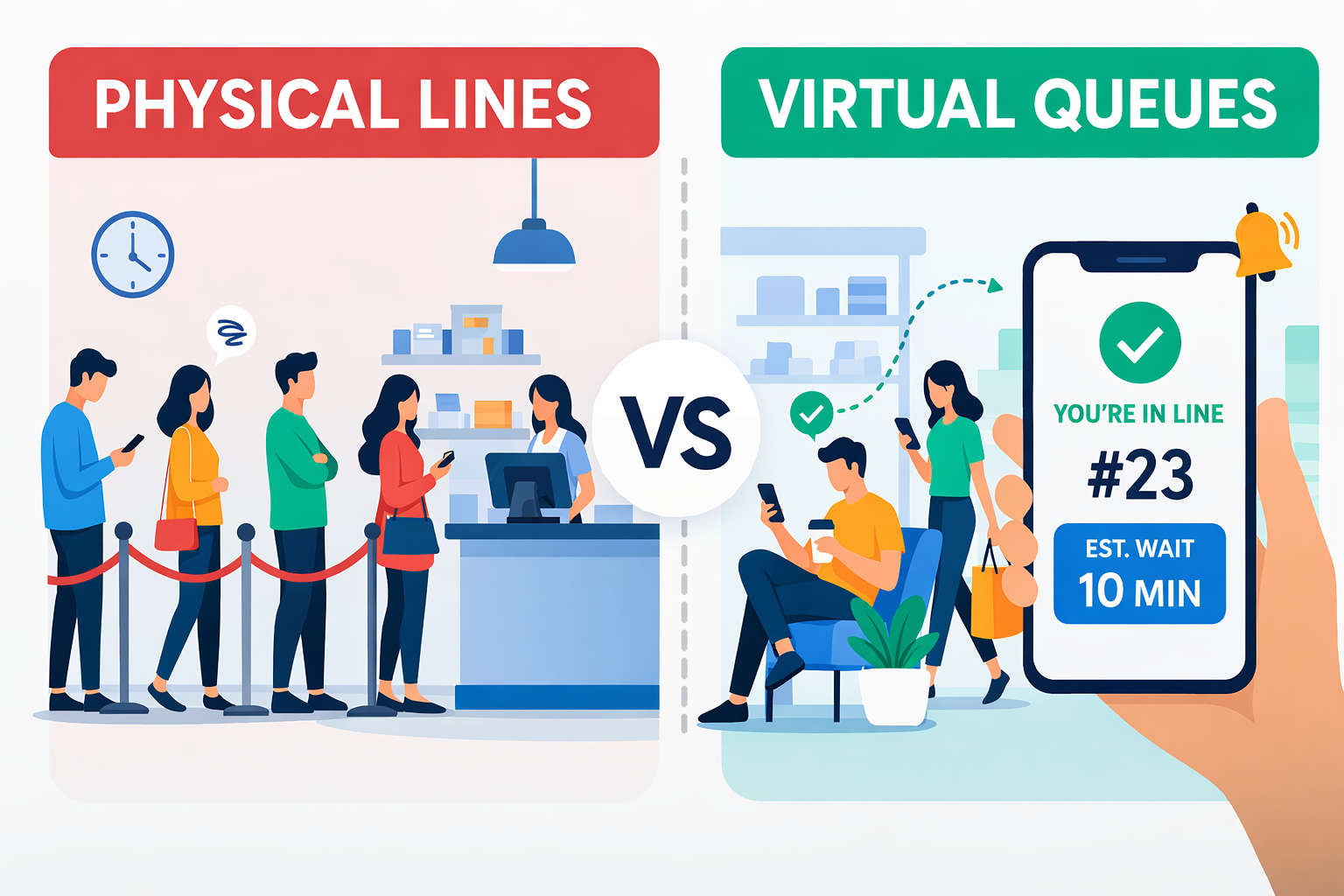
For decades, the traditional physical queue has been the standard way businesses manage customer demand. Whether in retail stores, banks, clinics, or barbershops, customers have historically waited in visible lines until it was their turn to be served.
However, in modern service environments where customer experience is critical, many organisations are moving away from traditional lines and adopting virtual queue systems instead.
Virtual queues allow customers to join a queue digitally, freeing them from standing in line while still maintaining their place in the service order.
In this guide, we’ll explore:
What physical queues are
How virtual queues work
The advantages and disadvantages of both systems
Why many businesses are transitioning to digital queue management
Real-world examples from retail and service industries
What Are Physical Queues?
A physical queue is the traditional system where customers wait in a visible line for service.
This system is familiar to almost everyone. Customers arrive, join the end of the line, and move forward as others are served.
Common examples include:
Supermarket checkout lines
Bank counters
Coffee shop queues
Government offices
Theme parks
Retail service desks
While simple, physical queues can create several operational challenges.
Common Problems with Physical Lines
Long waiting times
Customers must remain physically present while waiting.
Queue congestion
Busy periods can cause crowding in limited retail space.
Customer frustration
Waiting in a visible line often feels longer than it actually is.
Staff pressure
Employees may feel rushed when customers are visibly waiting.
Abandonment
Customers sometimes leave before reaching service due to long lines.
Retail studies consistently show that queue length strongly influences customer satisfaction and spending behaviour.
What Are Virtual Queues?
A virtual queue allows customers to join a line digitally instead of physically waiting in place.
Instead of standing in line, customers receive a position in a digital queue and are notified when it is nearly their turn.
Virtual queues are commonly accessed through:
Mobile apps
QR code check-ins
SMS systems
In-store kiosks
Website check-ins
Customers can then continue shopping, browsing, or relaxing while waiting.
When their turn approaches, they receive a notification telling them to return.
How Virtual Queue Systems Work
Although implementations vary, most virtual queue systems follow a similar process.
Step 1: Customer Joins the Queue
Customers join the queue through:
QR code scan
Mobile app
Website check-in
Staff check-in
Their name and position are entered into the queue management system.
Step 2: Queue Position is Assigned
The system automatically places them into the service order.
Customers can often see:
Estimated wait time
Position in queue
Service updates
Step 3: Customers Wait Freely
Instead of standing in line, customers can:
Continue shopping
Sit comfortably
Leave and return shortly before service
This dramatically improves the perceived waiting experience.
Step 4: Notification When It's Nearly Their Turn
When service is approaching, customers receive a notification via:
SMS
App notification
Screen display
This ensures they return just in time.
Physical Queues vs Virtual Queues: Key Differences
Feature
Waiting location
Space required
Customer experience
Queue visibility
Customer freedom
Queue abandonment
Data insights
Physical Queue
Standing in line
High
Often stressful
Visible crowd
Limited
Higher
None
Virtual Queue
Anywhere
Low
More relaxed
Digital list
High
Lower
Detailed analytics
Why Businesses Are Moving to Virtual Queues
Several major trends are driving adoption of digital queue systems.
1. Customer Experience Expectations
Modern consumers increasingly expect convenience and flexibility.
Standing in long physical lines feels outdated in an era where many services are digital-first.
Businesses that adopt virtual queues often see improvements in:
Customer satisfaction
Reviews and ratings
Return visits
2. Retail Space Efficiency
Physical lines occupy valuable retail space.
Large queues can:
Block aisles
Create congestion
Reduce browsing time
Virtual queues free up space and create a calmer shopping environment.
3. Reduced Queue Abandonment
Queue abandonment occurs when customers leave before being served.
Research consistently shows that customers are far less likely to abandon a virtual queue compared to a physical line.
This directly impacts revenue.
4. Operational Efficiency
Digital queue systems allow staff to manage demand more effectively.
Managers can:
Monitor queue length in real time
Adjust staffing levels
Predict peak periods
This helps businesses improve service speed and reduce bottlenecks.
5. Data and Analytics
Physical queues provide no data insights.
Virtual queue systems, however, provide valuable information such as:
Average wait times
Peak demand hours
Service duration
Customer flow patterns
These insights help businesses optimise operations.
When Physical Queues Still Make Sense
Despite the advantages of digital systems, physical queues are still appropriate in some situations.
For example:
Very short wait times
Quick transactions
Small shops with low foot traffic
Environments where technology adoption is low
In these cases, traditional lines may remain practical.
Hybrid Queue Systems
Many modern businesses now adopt a hybrid approach, combining physical and virtual queues.
For example:
Customers can:
Join digitally through an app
Join via a staff member
Wait physically if preferred
This flexible model ensures accessibility while improving customer flow.
Real-World Example: Retail Stores
Retail environments increasingly adopt virtual queues for services such as:
Customer service desks
Electronics consultation
Returns processing
Personal shopping appointments
Instead of standing in line, customers join digitally and receive notifications when staff are ready.
This creates a smoother in-store experience.
Real-World Example: Barbershops
Barbershops have historically relied on physical waiting lines.
However, digital queue systems now allow clients to:
Join the queue remotely
Track wait times
Arrive just before service
This improves customer satisfaction and reduces crowded waiting areas.
The Future of Queue Management
The shift from physical queues to virtual queues reflects a broader transformation in customer service.
Businesses increasingly prioritise:
Convenience
efficiency
digital experiences
real-time information
Virtual queue systems align with these expectations.
As technology adoption continues, digital queues are likely to become the standard waiting system across many industries.
Conclusion
Physical queues have served businesses for decades, but they come with limitations in modern customer environments.
Virtual queues offer a more flexible and efficient approach to managing demand, allowing customers to wait without standing in line.
For many organisations, adopting a digital queue management system improves customer satisfaction, operational efficiency, and overall service experience.
As businesses continue to focus on improving customer journeys, virtual queues are becoming an increasingly important part of modern service design.
FAQ Section
What is a virtual queue?
A virtual queue allows customers to join a waiting line digitally using a mobile phone, app, or QR code instead of physically standing in line.
How does a virtual queue system work?
Customers check in digitally, receive a queue position, and are notified when their turn is approaching.
Are virtual queues better than physical lines?
Virtual queues often improve customer experience because people can wait freely rather than standing in line.
Do virtual queues reduce wait times?
They don’t always reduce the actual wait time, but they significantly improve the perceived waiting experience.
Which businesses use virtual queue systems?
Retail stores, hospitals, barbershops, government offices, theme parks, and service centres commonly use virtual queues.