

Digital Queues in Retail: How Smart Stores Reduce Wait Times and Improve Customer Flow
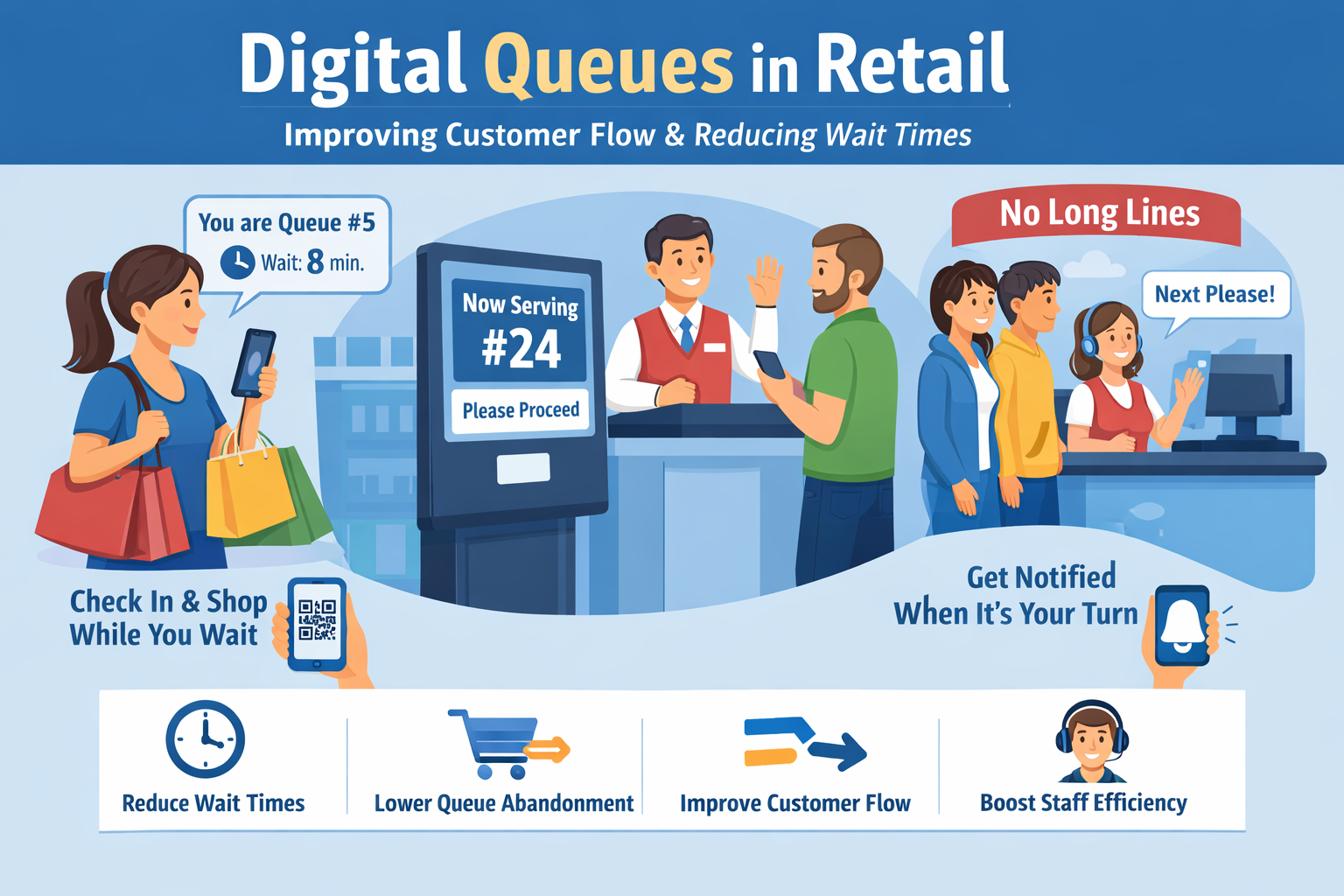
Retail has changed according to recent retail queue statistics. Customers still expect speed, convenience, and good service, but they now have far less patience for standing in line. Long waits at tills, service desks, fitting rooms, collection points, and busy promotional events can quickly turn a good shopping trip into a frustrating one.
Many retailers are adopting a queue management system for retail to introduce digital queues and reduce congestion in-store.
A digital queue allows retailers to manage waiting lines using technology rather than relying on crowded physical lines alone. Instead of forcing customers to stand and wait with no visibility of what is happening, stores can let them join a queue digitally, receive updates, monitor progress, and in many cases continue shopping while they wait. As more retailers move away from traditional lines, many are adopting a queue management system in the US to support digital queuing and improve customer experience.
For retailers, this creates a more controlled and efficient system. For customers, it creates a better experience.
In this guide, we will explain what digital queues in retail are, how they work, why they matter, and how they can help stores improve customer flow, reduce queue abandonment, and deliver a calmer, more modern service experience.
What Is a Digital Queue in Retail?
A digital queue in retail is a system that allows customers to join a waiting line electronically rather than standing in a traditional physical line for the entire duration of their wait.
This can happen in several ways, including:
scanning a QR code in-store
joining through a tablet or kiosk
checking in with a member of staff
receiving text updates about queue position
viewing estimated wait times
being called forward when it is their turn
Instead of forming a visible line that grows across the shop floor, the queue is managed digitally. Customers may still be inside the store, but they are no longer tied to standing in one fixed place.
This is especially valuable in retail because stores often need to manage multiple types of waiting at once, such as:
checkout queues
customer service desks
fitting room access
click-and-collect pickup
product launches or limited drops
consultations or assisted selling
in-store events and promotions
Digital queue solutions are powered by a modern queue management system that enables real-time tracking and improves customer flow.
Why Traditional Retail Queues Create Problems
Traditional retail queues are simple, but they come with major downsides.
When a line becomes too long, customers immediately begin making judgments. They may assume the store is understaffed, poorly organised, or not worth the wait. Even if the actual wait is manageable, the visual impact of a crowded line can damage the experience.
Common problems caused by physical queues in retail include:
1. Queue abandonment
Some shoppers simply walk away when they see a long line. This can mean lost basket value, lost impulse purchases, and in some cases lost customers entirely.
2. Poor use of store space
Long physical lines can block aisles, create congestion, and interfere with browsing. This is especially damaging in smaller stores or during peak periods.
3. Frustrated customers
Standing still with no updates can make even short waits feel longer. Uncertainty is one of the biggest causes of perceived waiting frustration.
4. Pressure on staff
When customers keep asking “How long will it be?” or “Who is next?”, staff spend time managing the line instead of serving customers.
5. Inconsistent service flow
Without a structured queue system, some customers may feel overlooked, others may become impatient, and service can become reactive rather than controlled.
Digital queues help address all of these issues.
How Digital Queues Work in Retail
A digital retail queue usually follows a simple journey:
Step 1: Customer joins the queue
The customer scans a QR code, uses a check-in screen, or is added by a member of staff.
Step 2: The system records their place
The customer receives confirmation that they are in the queue. Depending on the setup, they may also see an estimated wait time or current position.
Step 3: The customer waits more freely
Rather than standing in a fixed line, they can continue browsing, sit down, or wait more comfortably.
Step 4: Staff manage the queue digitally
Staff can call the next customer, view waiting times, prioritise service areas, and keep flow moving.
Step 5: Customer is called forward
When it is their turn, the customer is notified and directed to the right location or team member.
This creates a smoother system for both sides. The retailer gains visibility and structure. The customer gains flexibility and reassurance. This shift makes understanding what is a queue management system essential, as these systems power the technology behind modern digital queues.
The Key Benefits of Digital Queues in Retail
1. Reduced Perceived Waiting Time
One of the most powerful advantages of a digital queue is that it changes how waiting feels.
Customers dislike standing still more than they dislike waiting itself. If they can continue shopping, browse products, or simply avoid crowding in a line, the experience feels more productive and less frustrating.
This means digital queues can improve customer satisfaction even when total wait time stays similar.
2. Better Customer Flow
Retail stores perform best when movement feels easy and natural. Physical queues interrupt that flow. They create bottlenecks and visual clutter.
A digital queue removes the need for a large visible line, which helps:
keep aisles clearer
reduce crowding at service points
improve access around checkout and collection areas
create a calmer shopping environment
In busy retail settings, this can make a major difference to the overall atmosphere of the store.
3. Lower Queue Abandonment
When customers feel informed and in control, they are more likely to stay.
A digital queue reduces the “I cannot be bothered to wait here” reaction because the customer is not trapped in a static line. They know they have been checked in, they know the process is moving, and they can spend the waiting period more usefully. Retailers are increasingly using queue management systems for businesses to enable virtual queues, send notifications, and give customers more control over their waiting experience.
That can help retailers protect revenue that might otherwise be lost. Digital queues can significantly reduce queue abandonment in retail by removing physical waiting lines.
4. Improved Staff Efficiency
Retail staff already have enough to manage. A digital queue removes many of the manual tasks that slow service down, such as:
deciding who is next
answering repeated wait time questions
handling crowd control near service points
trying to remember order during busy periods
With a digital queue, staff have a clearer system to work from. This improves consistency and helps them stay focused on service.
5. Better Experience During Peak Times
Retail demand is rarely flat. Stores experience spikes during:
weekends
lunch breaks
late-night shopping
sale periods
Christmas and holiday events
product launches
promotional campaigns
These peaks are when queue problems become most visible. A digital queue helps retailers stay organised when footfall rises suddenly, making busy periods more manageable without the environment feeling chaotic.
6. Useful Queue Data and Insights
A digital queue system can also provide useful operational data, such as:
busiest service periods
average waiting times
service duration trends
abandonment patterns
staffing pressure points
This helps retailers make better decisions. Instead of relying purely on instinct, managers can review actual queue data and improve staffing, layout, and customer flow accordingly.
Where Digital Queues Work Best in Retail
Digital queues are not only for checkout lines. They can be used across a wide range of retail touchpoints.
Checkout Overflow
During busy periods, a digital queue can help manage overflow and reduce visible congestion around tills. Retailers looking to implement digital systems should also understand managing retail queues effectively during peak times.
Customer Service Desks
Returns, exchanges, product queries, and account issues often take longer than standard transactions. A digital queue gives these customers structure without creating crowding.
Click and Collect
Collection points can quickly become congested, especially during holidays or major promotions. Digital queueing allows collection traffic to be handled more smoothly.
Fitting Rooms
Fashion retailers can use digital queues to manage fitting room demand during peak periods, improving fairness and reducing crowding outside cubicles.
Assisted Selling
For stores offering one-to-one support, such as electronics, beauty, or high-ticket retail, digital queues can help allocate customers to available advisors more effectively.
Product Launches and Limited Drops
When demand is concentrated around one event or item, digital queueing provides structure and fairness while helping avoid disorder in-store.
What Customers Like About Digital Queues
From the customer side, digital queues solve several common frustrations.
Customers generally want:
to know they have secured their place
to understand what is happening
to avoid standing in a crowded line
to use waiting time more freely
to feel the process is fair and organised
A good digital queue gives them exactly that.
It turns waiting from a stressful, uncertain experience into a managed process. In a competitive retail environment, small improvements in convenience and control can have a big impact on how a brand is perceived.
What Retailers Need for a Good Digital Queue Experience
Not every digital queue creates a good experience. The system needs to be simple, clear, and easy to use.
Retailers should focus on a few essentials:
Clear check-in process
Customers should immediately understand how to join the queue.
Simple communication
Updates should be easy to follow. Customers need reassurance, not complexity.
Staff visibility
Employees should be able to see and manage the queue quickly without extra friction.
Minimal customer effort
The best digital queue systems work without requiring lots of downloads, steps, or explanation.
Flexible setup
Retail environments vary. A good solution should work across different store sizes, service points, and peak demand patterns.
Digital Queues and the Future of Retail Experience
Retail is increasingly shaped by convenience. Customers compare every experience not only with other stores, but with the smoothest experiences they have anywhere.
That means expectations are rising.
People are used to live updates, real-time visibility, mobile-first interactions, and frictionless service. A crowded, unclear physical queue now feels outdated in many settings.
Digital queues help retailers modernise without removing the human side of service. They do not replace good staff or good operations. They support them.
In many cases, the goal is not simply to make waiting shorter. It is to make waiting feel more controlled, more transparent, and less disruptive.
That shift can improve customer satisfaction, staff confidence, and store performance all at once.
Why QueueAway Fits Digital Queueing in Retail
QueueAway helps retailers replace unmanaged waiting with a simpler digital queue experience.
Using QueueAway, stores can:
let customers join a queue easily
reduce visible lines in-store
manage customer flow more clearly
support staff during peak periods
create a better waiting experience
monitor queues in a more structured way
For retail businesses looking to improve service without adding unnecessary complexity, digital queueing offers a practical step forward.
Final Thoughts
Digital queues in retail are no longer just a nice extra. They are becoming a practical queue management solution for stores that want to reduce wait-related frustration, improve customer flow, and create a more modern shopping experience.
Physical lines create pressure. They take up space, increase stress, and can drive customers away. A digital queue gives retailers more control and gives customers more freedom.
That makes it valuable not only for busy periods, but for everyday service.
As retail competition continues to rise, stores that make waiting easier, calmer, and smarter will be in a stronger position to keep customers happy and protect revenue.
If your retail business wants to improve queue management and customer flow, a digital queue may be one of the simplest upgrades you can make. If you're looking to modernise your store experience, QueueAway offers a powerful queue management system for retail designed to eliminate queues and improve in-store efficiency.
FAQ Section
What is a digital queue in retail?
A digital queue in retail is a system that allows customers to join a waiting line electronically instead of standing in a physical queue the entire time.
How do digital queues improve customer experience?
Digital queues improve customer experience by reducing uncertainty, lowering visible crowding, and allowing customers to continue browsing or waiting more comfortably.
Can digital queues reduce queue abandonment in retail?
Yes. When customers can join a queue digitally and receive updates, they are often more willing to stay rather than walk away from a long visible line.
Where can retailers use digital queues?
Retailers can use digital queues at checkouts, customer service desks, click-and-collect points, fitting rooms, assisted selling areas, and in-store events.
Do digital queues help retail staff?
Yes. Digital queues make it easier for staff to manage waiting customers, keep service organised, and reduce time spent manually controlling lines.