

Customer Flow in Retail: How Stores Manage Customer Movement to Reduce Waiting and Increase Sales
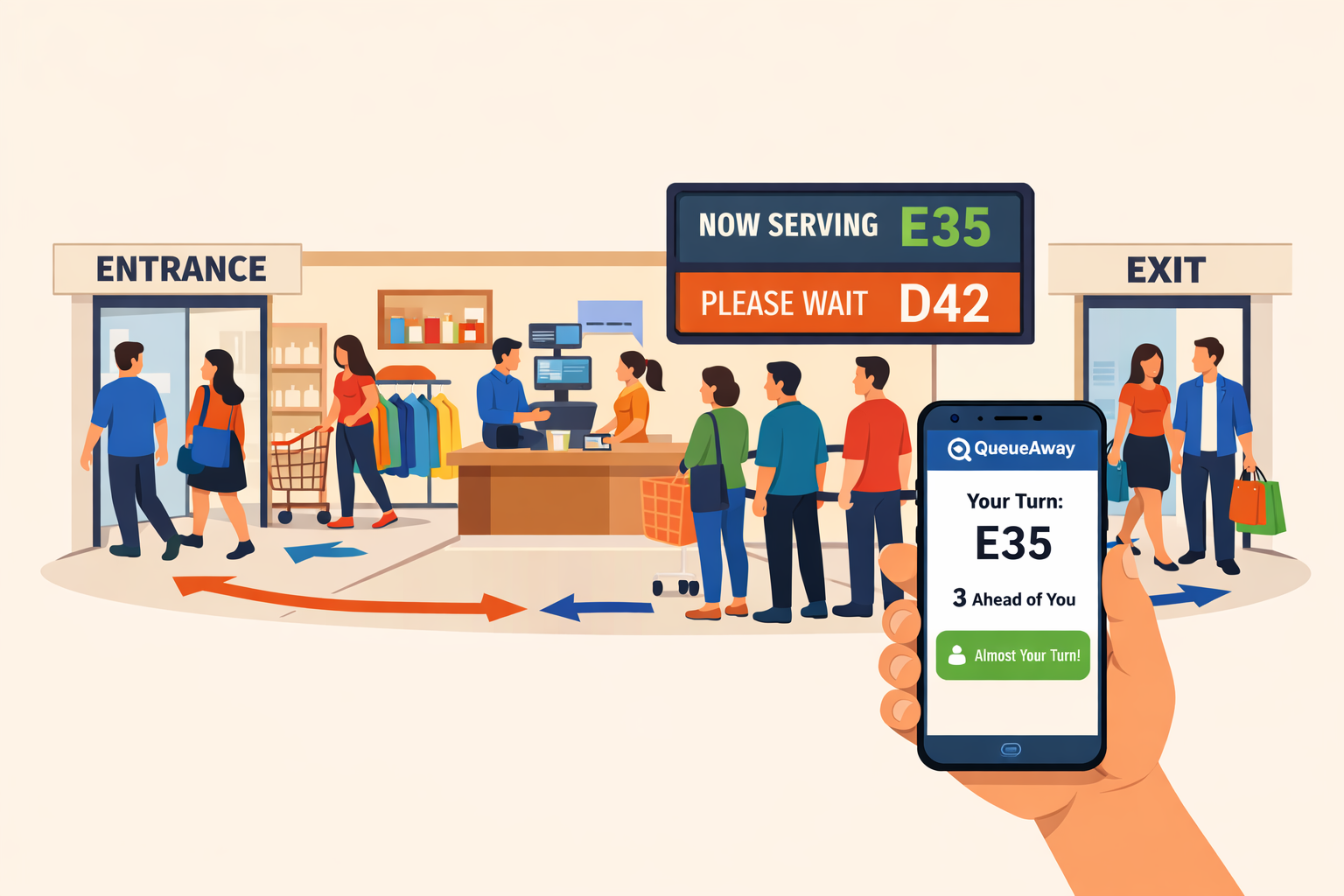
Retail success isn’t just about great products or attractive displays — it’s also about how customers move through the store.
From the moment a shopper walks through the door, their experience is shaped by customer flow. Poorly managed flow can create bottlenecks, long queues, frustration, and lost sales. Well-designed customer flow, however, leads to shorter wait times, smoother shopping experiences, and higher revenue per visitor. Improving customer flow is a key priority for retailers, with many adopting a queue management system for retail to reduce congestion and improve in-store efficiency.
In modern retail environments, customer flow management has become a science, combining store layout design, queue management systems, behavioural psychology, and real-time data to optimise the movement of shoppers through a space. As customer flow becomes more complex across retail environments, many businesses are turning to a queue management system in the US to better organise movement and reduce congestion.
In this guide, we explore:
What customer flow in retail means
Why it matters for sales and customer experience
How retailers measure customer flow
Common problems that disrupt flow
How queue management systems improve retail customer flow
What Is Customer Flow in Retail?
Customer flow refers to the movement of shoppers through a retail space, including:
Store entry
Browsing areas
Product displays
Checkout queues
Exit points
Retailers study customer flow to understand:
Where customers spend the most time
Where congestion happens
Which areas receive the most foot traffic
Where queues form
The goal is simple: guide customers smoothly through the store while minimising waiting and frustration.
Retail stores that optimise customer flow typically see improvements in:
Customer satisfaction
Conversion rates
Average basket size
Staff efficiency
Why Customer Flow Matters in Retail
Retail research consistently shows that customer movement directly impacts sales performance.
A poorly designed store layout can create friction, while a well-optimised flow encourages customers to browse longer and purchase more.
Studies have shown:
82% of shoppers avoid stores with long checkout lines
Nearly 1 in 3 customers abandon purchases if queues are too long
Customer satisfaction drops sharply once waiting exceeds 5 minutes
This means retailers must carefully manage both movement and waiting.
Customer flow affects:
Queue lengths
Staff workload
Checkout efficiency
Store capacity
Overall shopping experience
Customer movement and decision-making are heavily influenced by the psychology of waiting in retail, particularly during busy periods.
The Key Areas of Customer Flow in Retail
Retailers typically analyse customer flow in four key stages.
1. Entry Flow
This refers to how customers enter the store.
Retailers measure:
Entry points
Foot traffic patterns
Peak times
Understanding entry flow helps retailers plan staff scheduling and queue capacity. Recent retail queue statistics highlight how poor customer flow directly impacts store performance and customer satisfaction.
2. Browsing Flow
Browsing flow describes how customers move between displays and aisles.
Common issues include:
Narrow aisles
Congested displays
Poor product placement
Retailers often use store layout design and behavioural psychology to influence browsing patterns.
For example:
Placing popular items deeper in the store
Using wide aisles in high traffic zones
Creating natural pathways through displays
3. Checkout Flow
Checkout is where the biggest bottlenecks usually occur.
If queues grow too long, customer frustration rises quickly.
Retailers must manage:
Queue length
Waiting time
Staff allocation
Transaction speed
Modern stores increasingly use queue management systems to smooth checkout flow.
4. Exit Flow
Exit flow is often overlooked but important.
Retailers monitor:
Final queue experience
Post-checkout congestion
Customer departure speed
A smooth exit improves the overall perception of the shopping experience. Managing this effectively requires understanding what is a queue management system and how it can optimise both physical and virtual queues.
Common Problems That Disrupt Retail Customer Flow
Many retail environments struggle with predictable flow disruptions. Modern solutions rely on a queue management system that enables real-time tracking and better management of customer movement through stores.
Bottlenecks
These occur when too many customers move through a narrow area.
Common locations include:
Store entrances
Promotional displays
Checkout areas
Queue Congestion
Queues are the largest source of flow disruption in retail stores.
Long lines create:
Frustration
Abandoned baskets
Negative brand perception
Poor Layout Design
If stores are not designed with customer movement in mind, congestion increases.
Examples include:
Narrow aisles
Dead-end layouts
Poor signage
Understaffed Checkout Areas
If checkout capacity does not match customer traffic, queues quickly form.
Retailers often underestimate how quickly queues grow during peak periods.
How Retailers Measure Customer Flow
Retailers use several methods to analyse how shoppers move through their stores.
Footfall Counters
Sensors at entrances track the number of visitors entering the store.
This helps retailers measure:
Peak shopping times
Conversion rates
Customer volume trends
Heat Mapping Technology
Some stores use cameras or sensors to create heat maps showing where customers spend the most time.
These maps highlight:
High traffic areas
Underused spaces
Congestion points
Queue Analytics
Queue data provides insights into:
Average wait times
Queue abandonment
Service speed
Queue analytics are especially important for improving checkout flow.
How Queue Management Systems Improve Customer Flow
One of the most effective tools for improving retail customer flow is a queue management system.
Instead of forcing customers to stand in line, a queue system allows retailers to manage waiting digitally.
For example, systems like QueueAway allow customers to:
Join queues digitally
Track their position
Receive notifications when their turn approaches
This reduces physical congestion inside the store and improves the overall shopping experience.
Retailers benefit from:
Better customer flow
Lower queue abandonment
Improved staff allocation
Higher customer satisfaction
The Link Between Customer Flow and Sales
Customer flow doesn’t just affect waiting times — it directly impacts revenue.
When customer flow is smooth:
Customers spend more time browsing
Basket sizes increase
Staff can serve more people
Stores operate more efficiently
Retailers who optimise customer movement often see improvements in both sales and operational efficiency.
Future Trends in Retail Customer Flow
Retail environments are increasingly adopting new technologies to manage customer movement more effectively.
Emerging trends include:
AI-powered queue forecasting
Real-time store occupancy tracking
Mobile queue systems
Smart checkout solutions
Predictive staffing models
These tools allow retailers to anticipate congestion before it happens and adapt quickly.
Final Thoughts
Customer flow is one of the most important — and often overlooked — factors in retail performance.
When shoppers can move easily through a store without congestion or long queues, the entire experience improves.
Retailers that actively manage customer flow through store design, queue management solutions, and real-time data are far more likely to deliver a positive customer experience while increasing sales.
In an increasingly competitive retail landscape, optimising customer flow is no longer optional — it’s essential. If you're looking to improve customer flow and reduce congestion, QueueAway offers a powerful queue management system for retail designed to optimise in-store experiences.
FAQ: Customer Flow in Retail
What is customer flow in retail?
Customer flow in retail refers to how shoppers move through a store, including entry points, browsing areas, checkout queues, and exits. Effective customer flow helps reduce congestion, shorten waiting times, and improve the overall shopping experience.
Why is customer flow important in retail stores?
Customer flow is important because it directly affects waiting times, queue length, store congestion, and customer satisfaction. When shoppers can move easily through a store without delays, they are more likely to stay longer, browse more products, and complete purchases.
What causes poor customer flow in retail?
Poor customer flow is often caused by narrow aisles, poorly designed store layouts, checkout bottlenecks, understaffed service areas, and congestion around popular displays or promotions. These issues can create queues and slow down movement through the store.
How do retailers improve customer flow?
Retailers improve customer flow by designing better store layouts, widening high-traffic pathways, improving signage, adjusting staffing during peak hours, and using queue management systems to organise waiting more efficiently.
How does a queue management system help customer flow in retail?
A queue management system helps customer flow by reducing physical lines and organising waiting digitally. Customers can join a queue remotely, track their position, and receive notifications when it is their turn, which reduces congestion and improves the shopping experience.
Can better customer flow increase retail sales?
Yes. Better customer flow can increase retail sales by reducing frustration, encouraging customers to browse longer, improving store efficiency, and reducing the likelihood of shoppers abandoning purchases due to long checkout queues.