

The Psychology of Waiting in Retail: Why Customers Hate Queues (and What Businesses Can Do)
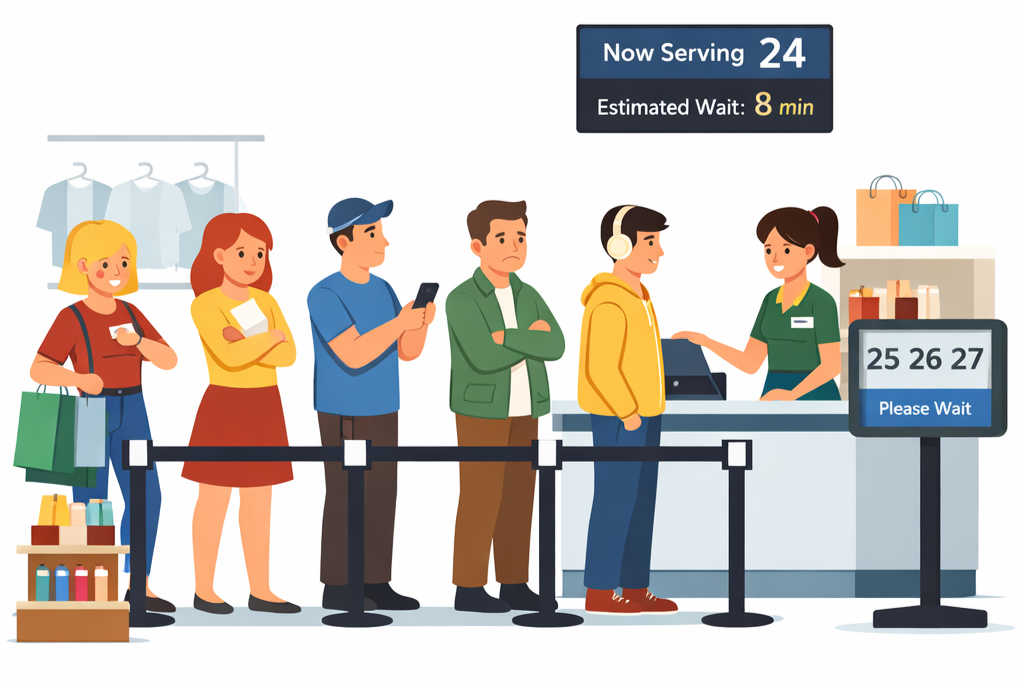
Waiting is one of the most powerful — and often overlooked — factors influencing customer experience in retail. While many businesses focus on pricing, product selection, and store layout, the psychology of waiting can determine whether customers complete a purchase or walk away entirely.
Research consistently shows that customers perceive waiting far more negatively than businesses expect. Even short waits can feel significantly longer depending on how the queue is structured, whether customers feel informed, and how fair the system appears. A modern queue management system allows businesses to organise customer flow and reduce the negative effects of long waiting lines.
Understanding the psychology behind waiting lines allows retailers to design better queue experiences and prevent lost sales. This is why many businesses are now exploring a queue management system to improve not just wait times, but how those waits are experienced by customers.
Why Waiting Feels Worse Than It Really Is
One of the most important principles in queue psychology is that perceived waiting time is often longer than the actual waiting time.
Studies in customer behaviour show:
Customers often overestimate wait times by 30–40%
People are more tolerant of waits under 5 minutes
After 10 minutes, frustration increases rapidly
Around 60% of shoppers will abandon a queue that appears too long
This means a queue that actually lasts 7 minutes may feel like 10–12 minutes to the customer.
Retailers therefore need to manage not just the queue itself, but also how the queue feels. This is where understanding what is a queue management system becomes important, as modern systems focus on managing perception as much as time itself.
The Eight Psychological Principles of Waiting
Queue psychology has been studied for decades in service industries. Several well-known principles explain why waiting can feel so frustrating. Recent studies analysing retail queue statistics reveal that long queues influence both customer satisfaction and whether shoppers complete a purchase.
1. Unoccupied Time Feels Longer
When customers have nothing to do, waiting feels significantly longer. Customer tolerance levels play a major role in perceived waiting experiences.
Examples include:
Standing in a silent line
No estimated wait time
No engagement
This is why environments such as airports, theme parks, and modern retail stores try to occupy customers while they wait. Research into average wait times in retail stores shows that customers often perceive the wait to be much longer than the actual time spent in line.
Retail solutions include:
Product displays near the queue
Digital screens
Queue position updates
Mobile notifications
Virtual queue systems allow customers to continue shopping instead of physically standing in line, dramatically improving the waiting experience.
2. Uncertain Waits Feel Longer
One of the biggest triggers of frustration is not knowing how long the wait will be.
Customers are far more patient when they know:
Their position in the queue
Estimated wait time
When they will be served
Without this information, customers begin to assume the worst and are more likely to abandon the queue.
Retailers increasingly solve this problem using digital queue management systems that show live wait estimates.
3. Unfair Queues Cause Anger
Humans have a strong psychological reaction to perceived unfairness.
Nothing irritates customers more than:
Someone skipping the line
Staff serving people out of order
Confusing queue structures
Retail environments with multiple service counters often accidentally create this problem.
A single queue system feeding multiple staff members is widely recognised as the fairest solution.
4. Anxiety Makes Waiting Feel Longer
Customers waiting for important services feel increased anxiety.
Examples include:
Pharmacy counters
Customer service desks
Technology support
Financial services
Anxiety makes time feel slower, which increases perceived wait times.
Providing clear information, reassurance, and queue visibility can significantly reduce this effect.
5. Physical Queues Increase Frustration
Standing in a long visible line triggers a strong psychological response.
Research shows customers are far more likely to abandon a queue when:
The line looks long
Movement appears slow
There is no visible progress
Even if the wait time is reasonable, a long physical queue can discourage customers from joining.
This is one reason why retailers increasingly adopt virtual queue systems, which remove visible lines entirely.
6. Waiting After Service Starts Feels Worse
Customers tolerate waiting before service begins, but they react negatively when delays occur during service. Long waits often lead to queue abandonment in retail, where shoppers decide the line is not worth the wait and leave the store.
Examples include:
Payment systems freezing
Staff leaving the counter
Technology delays
Smooth service once the customer reaches the counter is therefore crucial.
7. Value Affects Wait Tolerance
Customers are willing to wait longer for high-value services.
Examples include:
Luxury goods
Popular restaurants
Specialist services
However, tolerance is much lower for everyday purchases such as groceries or convenience retail.
Retailers must therefore match queue systems to customer expectations.
8. Social Comparison Influences Waiting
Customers constantly compare their wait with others.
If they see:
Another queue moving faster
Someone being served quicker
Staff appearing idle
their frustration increases.
Queue systems must therefore ensure consistent flow and fairness across service points.
The Real Cost of Poor Queue Experiences
Poorly managed queues don't just frustrate customers — they directly affect revenue.
Retail research suggests:
60–70% of shoppers will abandon a queue if it appears too long
30% of customers will leave a store entirely due to waiting
Nearly half of shoppers say long queues reduce their likelihood of returning
For retailers operating on tight margins, queue abandonment can translate into significant lost sales.
How Modern Retailers Improve Queue Psychology
Retail businesses are increasingly adopting strategies to reduce negative waiting experiences. Tools like queue management systems for businesses allow customers to track their position, receive updates, and feel more in control of their time.
Common approaches include:
Digital Queue Management
Customers join a queue digitally rather than physically.
Benefits include:
No visible line
Customers can continue browsing
Accurate wait estimates
Reduced crowding
This approach is widely used in:
Apple Stores
Technology retailers
mobile phone stores
service counters
Virtual Queue Apps
Virtual queue apps allow customers to join a queue from their phone.
Customers receive:
Live queue updates
Notifications when their turn approaches
Freedom to move around the store
Retailers benefit from:
Reduced congestion
Higher customer satisfaction
increased purchase likelihood
Solutions like QueueAway allow businesses to implement virtual queues with minimal setup.
Queue Transparency
Simply providing information about wait times dramatically improves customer perception.
Retailers often use:
Digital displays
ticket systems
queue tracking apps
Transparency helps customers feel in control of their waiting experience.
Why Queue Experience Is Now Part of Customer Experience
Customer experience is increasingly recognised as a key competitive advantage. Studies examining how long customers will wait in retail stores suggest that patience drops rapidly once wait times exceed ten minutes.
Retailers invest heavily in:
store design
product availability
staff training
However, queue management is often overlooked despite being one of the last interactions customers have before completing a purchase.
A poor queue experience can undo an otherwise excellent shopping journey.
The Future of Retail Queue Management
As retail environments evolve, queue management is becoming more technology-driven. A modern queue management systemallows businesses to organise customer flow and reduce the negative effects of long waiting lines.
Trends include:
virtual queue apps A virtual queue app allows customers to join a line digitally and continue browsing instead of standing in a physical queue.
AI-powered wait predictions
mobile notifications
digital customer flow management
Retailers that understand the psychology of waiting will be better positioned to deliver faster, calmer, and more enjoyable customer experiences.
Final Thoughts
Waiting is inevitable in retail, but frustration is not. Tools like queue management systems for businesses allow customers to track their position, receive updates, and feel more in control of their time.
By understanding the psychology of queues and implementing smarter queue management systems, businesses can transform waiting from a negative experience into a smooth and predictable part of the customer journey.
Modern solutions like QueueAway’s queue management system for retail allow retailers to reduce visible queues, improve perceived wait times, and create a more relaxed environment for customers and staff alike.
Q&A Section
Why do customers hate waiting in queues?
Customers dislike waiting because uncertain and unoccupied time feels longer than it really is. The psychology of waiting means customers often perceive queues as longer than they actually are.
How long will customers typically wait in a retail store?
Most customers tolerate waits of around 5 minutes. After 10 minutes, frustration increases significantly and the likelihood of queue abandonment rises.
What is queue abandonment in retail?
Queue abandonment occurs when customers leave a queue before being served because the wait appears too long or frustrating.
How can retailers reduce customer wait frustration?
Retailers can reduce frustration by providing estimated wait times, using single queue systems, implementing digital queue management, and allowing customers to join virtual queues.
What is a virtual queue system?
A virtual queue system allows customers to join a queue digitally instead of standing in line, often through a mobile app or kiosk.