

Average Wait Times in Retail Stores (2026): How Long Customers Really Wait
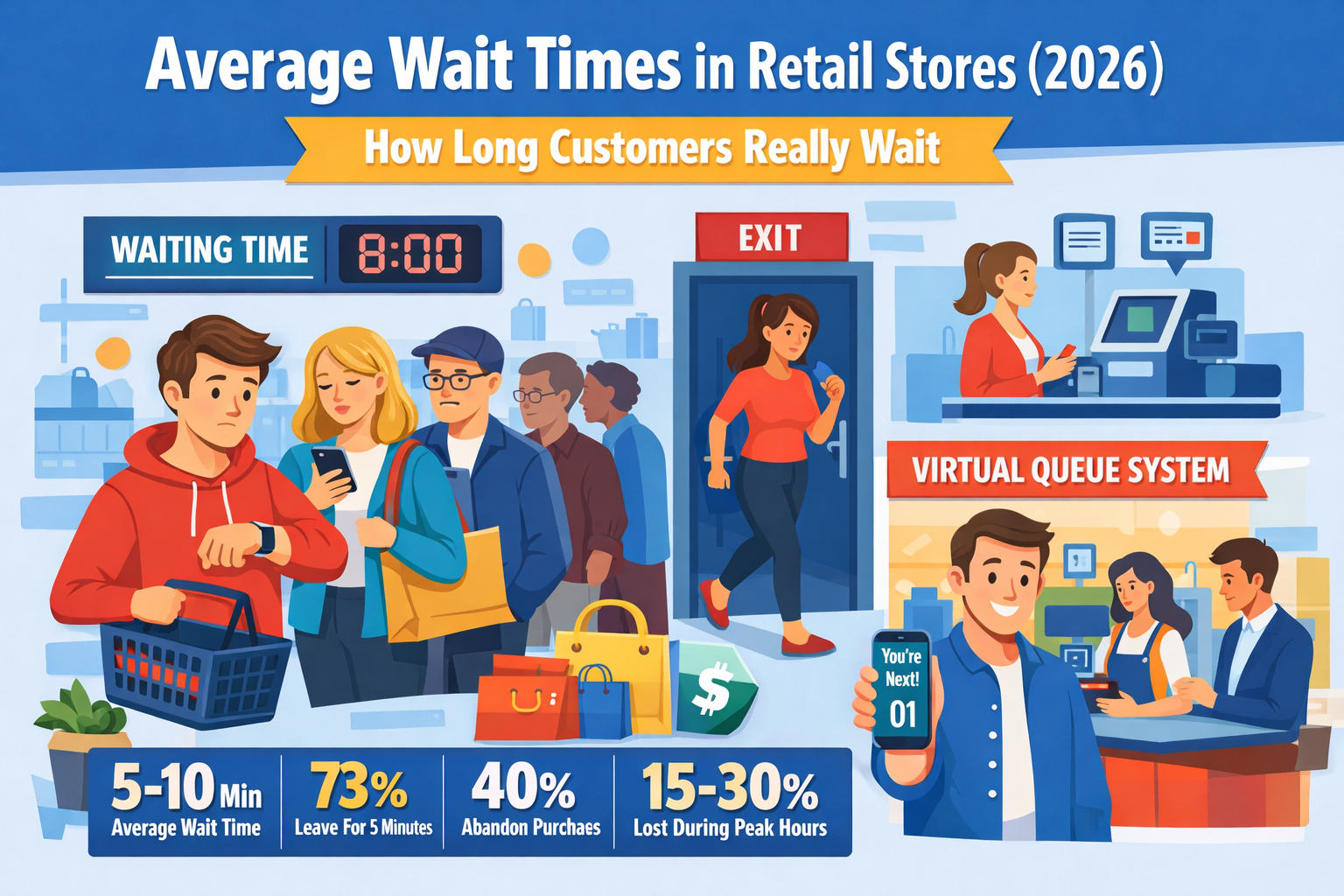
Retail queues are one of the biggest hidden drivers of lost sales. Every day, customers walk into stores intending to buy — only to abandon their purchase when faced with a long line.
While waiting is unavoidable in busy retail environments, research consistently shows that customers are far less patient than many retailers realise. Many retailers are adopting a queue management system for retail to reduce average wait times and improve customer experience.
Understanding the average wait time in retail stores, how long customers are willing to wait, and how queue management affects behaviour can help businesses reduce walkouts and increase revenue.
In this guide, we explore:
The average wait times in retail stores
How long shoppers are willing to queue
Why customers abandon queues
The economic impact of waiting
How retailers reduce queues using modern technology
The Average Wait Time in Retail Stores
Across most retail environments, checkout queues typically last between 5 and 10 minutes. During busy periods such as weekends, holidays, and sales events, wait times can stretch well beyond 15 minutes.
However, customer tolerance for waiting is significantly shorter.
Studies show the average shopper will abandon their purchase after around 5–6 minutes of waiting in a queue.
Some key benchmarks from retail research:
Wait Time
0–3 minutes
3–5 minutes
5–10 minutes
10+ minutes
Customer Behaviour
Most customers remain comfortable
Frustration begins to build
Many customers consider leaving
Large numbers abandon the store
Research shows that once queues exceed five minutes, customer perception of the store deteriorates rapidly.
This means that even relatively short lines can have a major impact on sales. Many stores now use a queue management system for retail to track wait times, manage customer flow, and reduce checkout congestion during peak periods.
How Long Customers Are Willing to Wait
While average queue times vary depending on the type of store, research into consumer behaviour reveals a consistent pattern.
Key statistics on customer patience
The average shopper abandons their basket after about 5 minutes and 54 seconds.
73% of shoppers abandon purchases if the queue exceeds five minutes.
40% of customers have left a store without buying due to long lines.
Only 19% of shoppers say they would never abandon a queue, regardless of wait time.
These numbers show that queue tolerance is extremely limited, especially in modern retail where customers have alternatives like online shopping.
The Cost of Long Queues for Retailers
Long queues don’t just frustrate customers — they directly impact revenue.
Retail studies estimate that queues cause stores to lose up to 10% of potential footfall because customers avoid entering when they see long lines.
Even when customers do enter, queue abandonment can have a huge financial impact.
For example:
Busy stores can lose 15–30% of customers during peak periods due to waiting.
A typical retail location could lose thousands of pounds per day from abandoned transactions.
Multiply that across multiple locations, and queues quickly become one of the biggest hidden costs in retail operations. Long wait times are a leading cause of queue abandonment in retail, where customers leave before completing a purchase.
Why Retail Queues Frustrate Customers
The problem with queues isn’t just the wait time itself — it’s how customers perceive the wait. Understanding how long customers will wait in retail stores helps retailers benchmark acceptable wait times
Research into queue psychology shows that uncertainty and boredom make waits feel longer than they actually are.
Several factors influence how customers experience waiting:
1. Lack of time visibility
Customers become more frustrated when they don’t know how long they will be waiting.
2. Visible queues at store entrances
Long lines at the checkout can discourage new customers from even entering the store.
3. Perceived unfairness
Multi-line checkout systems often create the feeling that other queues are moving faster.
4. Unoccupied waiting time
Waiting without distractions makes time feel longer.
Retailers who manage these factors effectively can dramatically improve the customer experience even without reducing actual wait time. Customer perception of waiting is heavily influenced by the psychology of waiting in retail, which can make queues feel longer than they are.
Peak Retail Queue Times
Queues in retail stores usually occur during predictable periods:
Weekend shopping peaks
Holiday seasons
Flash sales and promotions
Lunch and after-work rushes
Major product launches
During these periods, average wait times can exceed 15 minutes in some stores, which dramatically increases the risk of walkouts. Reducing wait times at scale often requires a modern queue management system that enables real-time tracking and better customer flow.
This is why many retailers now treat queue management as a core operational strategy rather than a minor inconvenience. Retailers can reduce wait times by improving managing retail peak queues during busy periods.
The Rise of Virtual Queue Systems in Retail
To solve the problem of long lines, many retailers are adopting digital queue management systems.
Instead of forcing customers to physically stand in line, modern queue systems allow shoppers to:
Join a queue digitally
Receive updates on their wait time
Continue shopping while waiting
Be notified when it’s their turn
Research shows that virtual queues are preferred by over half of customers because they remove the frustration of standing in line. Some retailers are experimenting with digital queues in retail environments to reduce congestion and give customers better visibility of waiting times.
This approach improves both customer satisfaction and store efficiency.
How Queue Management Improves Retail Performance
Retailers who actively manage queues often see improvements in several areas:
Higher sales
Fewer customers abandon purchases. Longer checkout lines significantly increase retail queue abandonment, where customers leave the store before completing their purchase.
Better customer experience
Shorter or more transparent wait times reduce frustration.
Increased staff efficiency
Queue systems help allocate staff to busy areas.
Higher return visits
Customers are more likely to revisit stores with efficient service.
In a competitive retail landscape, waiting experience is now part of the overall brand experience.
Key Takeaways: Average Wait Times in Retail
Retail queue statistic research consistently shows that customers are impatient when it comes to waiting.
Important insights include:
Average retail wait times are 5–10 minutes
Customers typically abandon queues after around 5 minutes
Up to 73% of shoppers walk away from long lines
Retailers can lose 10% of footfall due to visible queues
For modern retailers, improving the queue experience is no longer optional — it’s essential. Many retailers now use a retail queue management system to monitor waiting times, improve customer flow, and reduce congestion at checkout.
Businesses that reduce wait times or introduce digital queue management systems can significantly improve both customer satisfaction and sales performance.
What is the average wait time in a retail store?
The average wait time in a retail store is typically between 5 and 10 minutes, depending on the type of store, staffing levels, time of day, and seasonal demand. During peak shopping periods such as weekends, holidays, or major sales events, wait times can increase significantly. Research into how long customers will wait in retail stores suggests that patience drops sharply once queues exceed a few minutes.
How long will customers wait in a retail queue before leaving?
Many customers begin to feel frustrated after around 3 to 5 minutes of waiting. Once queues exceed this point, the likelihood of customers abandoning their purchase increases rapidly, especially if the line appears slow or disorganised.
Why do long queues matter in retail?
Long queues can cause customers to abandon purchases, leave the store, or avoid returning in the future. They also negatively impact customer perception of the business and can discourage new shoppers from entering when they see long lines.
What causes long wait times in retail stores?
Long wait times are usually caused by understaffed checkouts, sudden spikes in customer footfall, inefficient payment processes, poor queue layout, or a lack of visibility into customer flow. Retailers often struggle during peak hours when demand increases quickly.
How can retailers reduce wait times?
Retailers can reduce wait times by adding staff during busy periods, improving checkout efficiency, introducing self-service options, optimising queue layouts, and implementing digital queue management systems that help manage customer flow more effectively.
What is a virtual queue in retail?
A virtual queue allows customers to join a line digitally rather than standing in a physical queue. Customers can continue shopping or wait elsewhere while receiving notifications when it is their turn to be served.
Do queues affect customer behaviour?
Yes. Queues can strongly influence customer behaviour. Long or poorly managed queues increase frustration, reduce satisfaction, and often cause shoppers to abandon purchases. Queue experience is now a major part of the overall retail customer journey.
Can queue management systems help retail stores increase sales?
Yes. Queue management systems help reduce wait times, improve service flow, and prevent queue abandonment. By managing customer flow more efficiently, retailers can serve more customers, improve satisfaction, and increase completed transactions.