

How Long Customers Will Wait in Retail Stores (And Why They Leave)
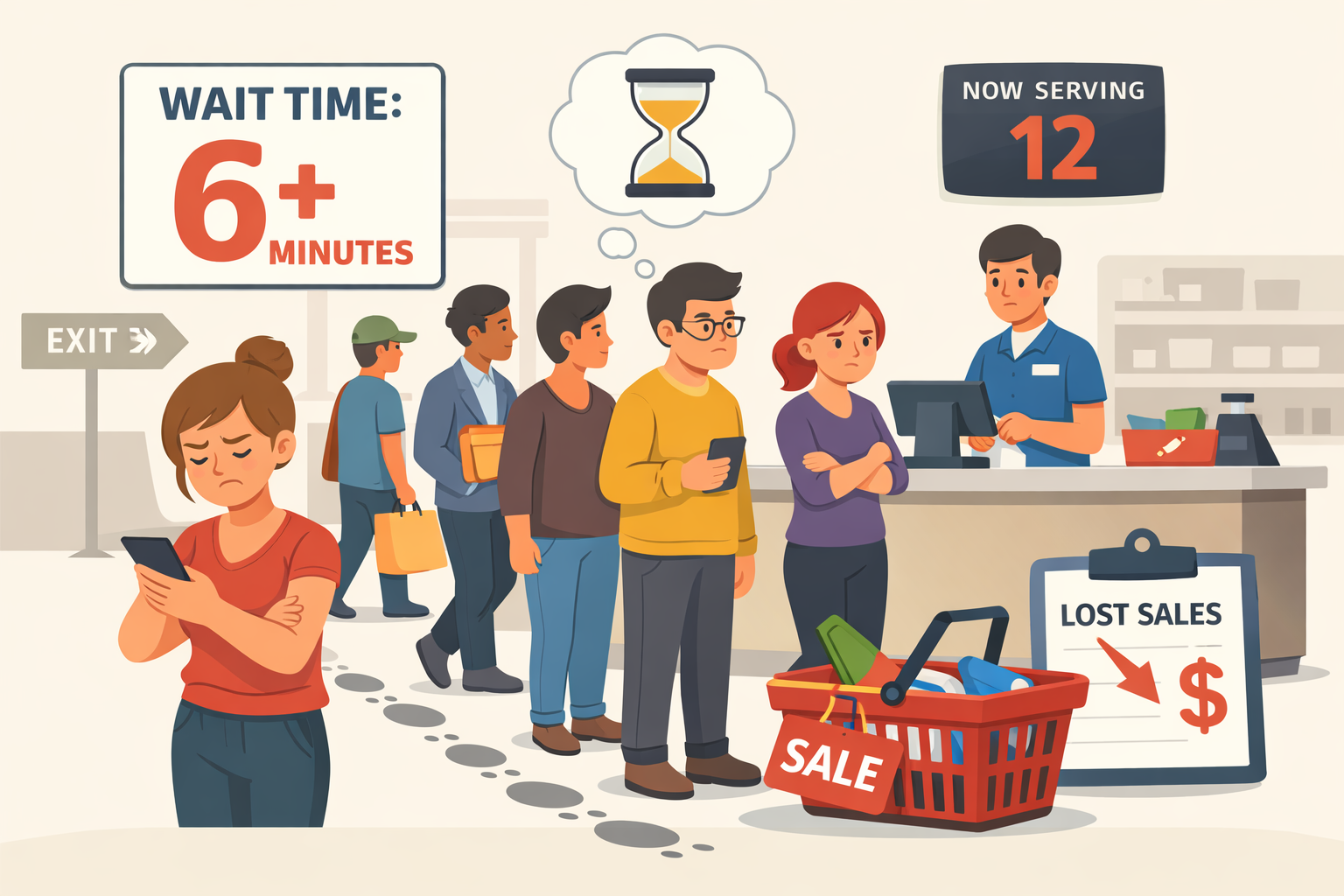
Waiting in line is one of the most common frustrations in retail. Whether it’s a busy supermarket checkout, a fashion store fitting room queue, or a customer service desk during peak hours, queues are part of the retail experience.
But modern customers have become far less tolerant of waiting. As expectations around speed and convenience increase — driven by online shopping, mobile apps, and instant services — physical retailers face growing pressure to reduce waiting times. Many retailers are adopting a queue management system for retail to reduce wait times and keep customers engaged before they leave.
Understanding how long customers are willing to wait, why they abandon queues, and how queues impact revenue is essential for modern retail businesses.
In this guide we’ll explore:
Average retail wait times in stores
How long customers are willing to wait before leaving
Why customers abandon queues
The hidden revenue impact of long lines
How retailers are reducing wait times with modern queue management
Average Wait Times in Retail Stores
Retail wait times vary significantly depending on store type, staffing levels, and peak demand periods.
Studies across North America and Europe suggest that customers commonly experience waiting times between 3 and 10 minutes in retail environments.
Typical wait times by retail category include:
Average Wait Time
5–8 minutes
3–6 minutes
4–7 minutes
4–8 minutes
6–10 minutes
Retail Type
Supermarkets
Clothing stores
Electronics stores
Department stores
Customer service desks
While these numbers may seem relatively small, even short delays can strongly influence customer satisfaction.
Research from the National Retail Federation shows that customer perception of wait time is often worse than the actual wait. A three-minute queue can feel much longer when customers do not know how long they will be waiting.
This is why queue transparency and expectation management are critical.
How Long Customers Are Willing to Wait
Customer tolerance for waiting has decreased dramatically over the past decade.
Several major studies reveal a clear pattern:
73% of customers say waiting in line is their biggest frustration in retail.
32% of shoppers will abandon a purchase if the checkout queue is too long.
69% say they would shop somewhere else next time after a long wait.
In practical terms, most customers have a wait tolerance of around 5–6 minutes before frustration begins.
Typical customer patience thresholds look like this:
Customer Behaviour
Acceptable wait
Mild frustration
Increased abandonment risk
High likelihood of leaving
Wait Time
0–2 minutes
3–5 minutes
6–8 minutes
9+ minutes
This means that every additional minute in a queue dramatically increases the risk of losing a sale.
Retailers that regularly exceed 5 minutes average wait time often experience measurable revenue loss. Reducing wait times at scale often requires a modern queue management system that enables real-time tracking and better customer flow.
Queue Abandonment in Retail
Queue abandonment refers to customers leaving a queue before completing their purchase.
This behaviour is more common than many retailers realise.
Research across global retail environments shows:
20–40% of customers abandon queues during peak hours
Over 60% of shoppers avoid stores known for long lines
Retailers lose billions annually due to queue abandonment
Queue abandonment typically occurs for several reasons.
1. Visible Long Lines
Customers often make decisions before even joining a queue.
If a checkout line looks too long, many customers simply leave the store without attempting to wait.
This phenomenon is known as visual queue deterrence.
In busy retail environments, visible queues can discourage potential customers from entering the purchasing process entirely.
2. Lack of Wait Time Information
Customers are far more tolerant of waiting when they understand how long the wait will be.
Uncertainty increases perceived waiting time dramatically.
This is why airlines, theme parks, and hospitals increasingly use digital queue displays or virtual queue systems to provide estimated wait times. Understanding average wait times in retail helps benchmark what customers consider acceptable.
Transparency reduces frustration.
3. Inefficient Checkout Processes
Queue delays are often caused by operational inefficiencies such as:
Understaffed tills
Slow payment systems
Complex returns
Price checks
Customer service questions at checkout
Each delay compounds the queue behind it. Recent retail queue statistics highlight just how quickly customers become frustrated with delays.
Modern retailers increasingly separate checkout and service desks to prevent bottlenecks.
The Hidden Cost of Retail Waiting Lines
Long queues don’t just frustrate customers — they directly impact revenue. When wait times exceed expectations, it often leads to queue abandonment in retail, where customers leave before purchasing.
Several retail studies have attempted to quantify the financial impact of queue delays.
Key findings include:
Retailers lose up to 13% of potential revenue due to long queues
Nearly 1 in 3 shoppers abandon purchases when lines are long
Customers who experience long waits are less likely to return
For large retail chains, queue abandonment can represent millions in lost sales annually.
Even smaller retailers can experience measurable revenue loss during peak trading hours.
For example:
A busy clothing store serving 50 customers per hour may lose several sales if just 10% abandon the queue.
Across a full trading day, that can represent dozens of lost transactions.
Why Customer Perception Matters More Than Actual Wait Time
Interestingly, customer frustration is often driven more by perceived wait time than actual wait time. Customer patience is heavily influenced by the psychology of waiting in retail, especially when time feels longer than it actually is
Psychological research into queuing behaviour shows that:
Unoccupied time feels longer than occupied time
Uncertain waits feel longer than known waits
Unfair queues cause frustration faster
Retailers that manage queue perception effectively often achieve higher satisfaction even when actual waiting times are similar.
For example:
Visible queue progress
Estimated wait time displays
Staff acknowledging customers
These small changes significantly reduce frustration.
How Modern Retailers Are Reducing Wait Times
To reduce queue abandonment and improve customer experience, many retailers are adopting digital queue management technology.
These systems help manage customer flow, reduce visible lines, and improve wait time transparency. Retailers can improve tolerance levels by focusing on managing retail peak queues more effectively during busy periods.
Common retail queue solutions include:
Virtual Queues
Customers join a queue digitally using a mobile device or kiosk.
Instead of standing in line, they can continue browsing the store until it is their turn.
This eliminates visible queues while maintaining order.
Queue Position Tracking
Customers can see their position in the queue and estimated wait time.
This reduces uncertainty and improves perceived fairness.
Demand Forecasting
Advanced queue management systems help retailers understand peak demand periods.
This allows stores to schedule staff more efficiently and reduce bottlenecks.
Customer Flow Management
Retail queue software helps businesses monitor:
wait times
service speed
queue abandonment rates
peak demand periods
These insights help retailers optimise staffing and operations.
For many modern retailers, queue management has become an essential operational tool.
How Queue Management Systems Improve Retail Customer Experience
A modern retail queue management system allows businesses to:
Reduce visible queues
Provide wait time estimates
Improve service efficiency
Reduce queue abandonment
Increase completed purchases
Many retailers now use digital queue systems not only for checkouts but also for:
fitting rooms
customer service desks
click-and-collect counters
product consultations
These solutions improve both customer satisfaction and operational efficiency.
Final Thoughts
Waiting in line is one of the biggest pain points in retail.
While short queues may be unavoidable during busy periods, long or unpredictable waits can quickly drive customers away.
Research consistently shows that most shoppers will tolerate no more than 5–6 minutes of waiting before frustration begins.
Retailers that actively manage queues — through staffing, better processes, and digital queue systems — are far better positioned to reduce abandonment and improve customer experience.
In a retail environment where convenience and speed increasingly define customer expectations, queue management is no longer just an operational detail — it is a competitive advantage. If you're looking to reduce wait times and keep customers engaged, QueueAway offers a powerful queue management system for retail designed to eliminate queues and improve customer experience.
Retail Queue Waiting – Frequently Asked Questions
How long are customers willing to wait in a retail store?
Most customers are willing to wait between 3 and 6 minutes in a retail queue before frustration begins. Research suggests that once wait times exceed 5 minutes, the likelihood of customers abandoning the queue increases significantly. Retailers that consistently keep checkout wait times under five minutes tend to experience higher customer satisfaction and fewer lost sales.
What percentage of customers abandon queues in retail stores?
Studies indicate that 20–40% of customers abandon queues during busy periods if the line appears too long or moves too slowly. Visible queues often discourage customers from even joining the line, which means retailers may lose potential sales before customers reach the checkout.
Why do customers leave queues in retail stores?
Customers typically leave queues for three main reasons:
• Long visible lines that suggest a lengthy wait
• Uncertainty about wait time, which increases frustration
• Slow service or inefficient checkout processes
When customers feel that waiting will take too long or is unfair, they are far more likely to abandon the queue.
What is the average wait time in retail stores?
Average retail wait times typically range from 3 to 8 minutes, depending on the type of store and the time of day. Supermarkets and department stores often experience longer wait times during peak hours, while smaller retail shops may see shorter queues but slower service.
How do long queues affect retail sales?
Long queues can significantly impact retail revenue. Research suggests that retailers may lose up to 13% of potential sales due to queue abandonment. Customers who experience long waits are also less likely to return to the store in the future, affecting long-term customer loyalty.
What is queue abandonment in retail?
Queue abandonment refers to customers leaving a line before completing their purchase. This behaviour is particularly common during peak shopping hours when checkout lines become longer and customers perceive the wait time as excessive.
How can retailers reduce queue abandonment?
Retailers can reduce queue abandonment by:
• Increasing staffing during peak periods
• Improving checkout efficiency
• Providing estimated wait times
• Implementing digital or virtual queue systems
Modern queue management systems allow retailers to monitor wait times and manage customer flow more effectively.
What is a retail queue management system?
A retail queue management system is a digital solution that helps businesses manage customer lines more efficiently. These systems can display estimated wait times, allow customers to join virtual queues, and provide retailers with real-time data about customer flow and service speed.