

Managing Retail Peak Queues: How Stores Handle Busy Shopping Periods
Introduction
Retail stores rarely operate at a constant pace. Instead, customer traffic rises and falls throughout the day, week, and year. Certain moments — lunchtime rushes, weekend shopping, seasonal promotions, or holiday periods — can create peak queue times where customer demand exceeds available service capacity.
During these peak periods, queues form quickly. If they are not managed effectively, customers may experience frustration, abandon their purchases, or avoid returning to the store in the future.
Retail queue statistic research consistently shows that long waiting lines are one of the leading causes of lost retail sales. When queues become too visible or unpredictable, customers often decide the wait is not worth it.
This is why many modern retailers now invest in a retail queue management systems, digital queue tools, and operational strategies designed specifically to manage peak demand. A modern queue management system helps retailers manage customer flow and prevent checkout bottlenecks during peak hours. During peak trading periods, many retailers rely on a queue management system in the US to maintain control, reduce congestion, and keep customer experiences consistent.
In this guide we will explore:
What peak queues are in retail
When peak queue periods occur
The impact of poor peak queue management
Strategies retailers use to manage busy periods
How queue management systems help retailers stay in control
What Are Peak Queues in Retail?
A peak queue occurs when the number of customers needing service temporarily exceeds the available staff or checkout capacity.
This usually results in:
Long checkout lines
Delays at service counters
Increased waiting times
Customer frustration
Queue abandonment
Peak queues are a normal part of retail operations, especially during predictable high-traffic times.
Common peak periods include:
Peak Period
Lunch hours
Weekends
Holidays
Sales events
End of work day
Example
Convenience stores and food retailers
Supermarkets and shopping centres
Christmas shopping season
Black Friday or promotional weekends
High street stores after 5pm
Retailers that understand these patterns can plan staffing and queue systems more effectively. Successfully handling peak demand often depends on choosing the right queuing system for high-traffic environments.
Why Peak Queues Are a Major Retail Challenge
Queues during busy periods do more than slow service — they directly affect customer behaviour. Studies examining average wait times in retail show that customers begin to feel frustrated surprisingly quickly.
Studies show that:
70% of shoppers say long checkout queues reduce their likelihood of returning to a store
Nearly one third of customers abandon purchases due to waiting times
Perceived waiting time often matters more than actual waiting time
During peak hours, these effects multiply because many customers experience the queue at the same time.
Retailers therefore focus heavily on reducing both real wait times and the visibility of queues. These challenges highlight why understanding what is a queue management system is essential for businesses dealing with fluctuating demand.
When Retail Peak Queues Typically Occur
Understanding traffic patterns is the first step in managing peak queues.
Daily Peaks
Most retailers experience predictable daily spikes.
Common examples include:
12pm–2pm lunch rush
4pm–6pm after-work shopping
School pickup times
Convenience stores and quick service retailers often see the biggest spikes during these periods.
Weekly Peaks
Weekends tend to generate the highest retail traffic.
Typical retail peak patterns include:
Saturday morning grocery shopping
Saturday afternoon shopping centres
Sunday afternoon browsing
Retailers must ensure enough checkout capacity to handle this surge.
Seasonal Peaks
Retail traffic also increases significantly during certain times of year.
Examples include:
Christmas shopping season
Back-to-school shopping
Black Friday promotions
Major sales events
These seasonal peaks can increase footfall dramatically.
For example, UK retail footfall during Black Friday weekend can increase by over 30% compared to normal weekends.
The Cost of Poor Peak Queue Management
If peak queues are not managed effectively, the consequences can be severe. When queues become too long, queue abandonment in retail becomes a serious risk for stores.
Lost Sales
Customers frequently abandon purchases if they believe the wait will be too long.
This behaviour is known as queue abandonment.
Retail studies suggest that abandoned purchases due to queues cost retailers billions annually worldwide.
Customer Frustration
Long waits negatively impact the overall shopping experience.
Even customers who complete their purchase may leave with a negative impression if the checkout process is slow.
Staff Stress
During busy periods, employees often feel overwhelmed by sudden spikes in demand.
This can lead to:
Mistakes at checkout
Slower service
Poor customer interaction
Strategies Retailers Use to Manage Peak Queues
Modern retailers combine operational planning and technology to control peak queues. Retailers increasingly turn to queue management software to organise peak demand and improve the customer experience.
Here are the most effective strategies.
1. Opening Additional Checkouts
The most traditional approach is simply increasing service capacity.
Retailers may:
Open additional tills
Assign staff to temporary checkout stations
Use self-checkout lanes
While effective, this strategy requires extra staff availability.
2. Self-Checkout Systems
Self-checkout lanes allow customers to process purchases themselves.
Benefits include:
Faster transaction times
Reduced staffing pressure
Shorter traditional queues
Many supermarkets now rely heavily on self-checkout technology.
3. Queue Management Systems
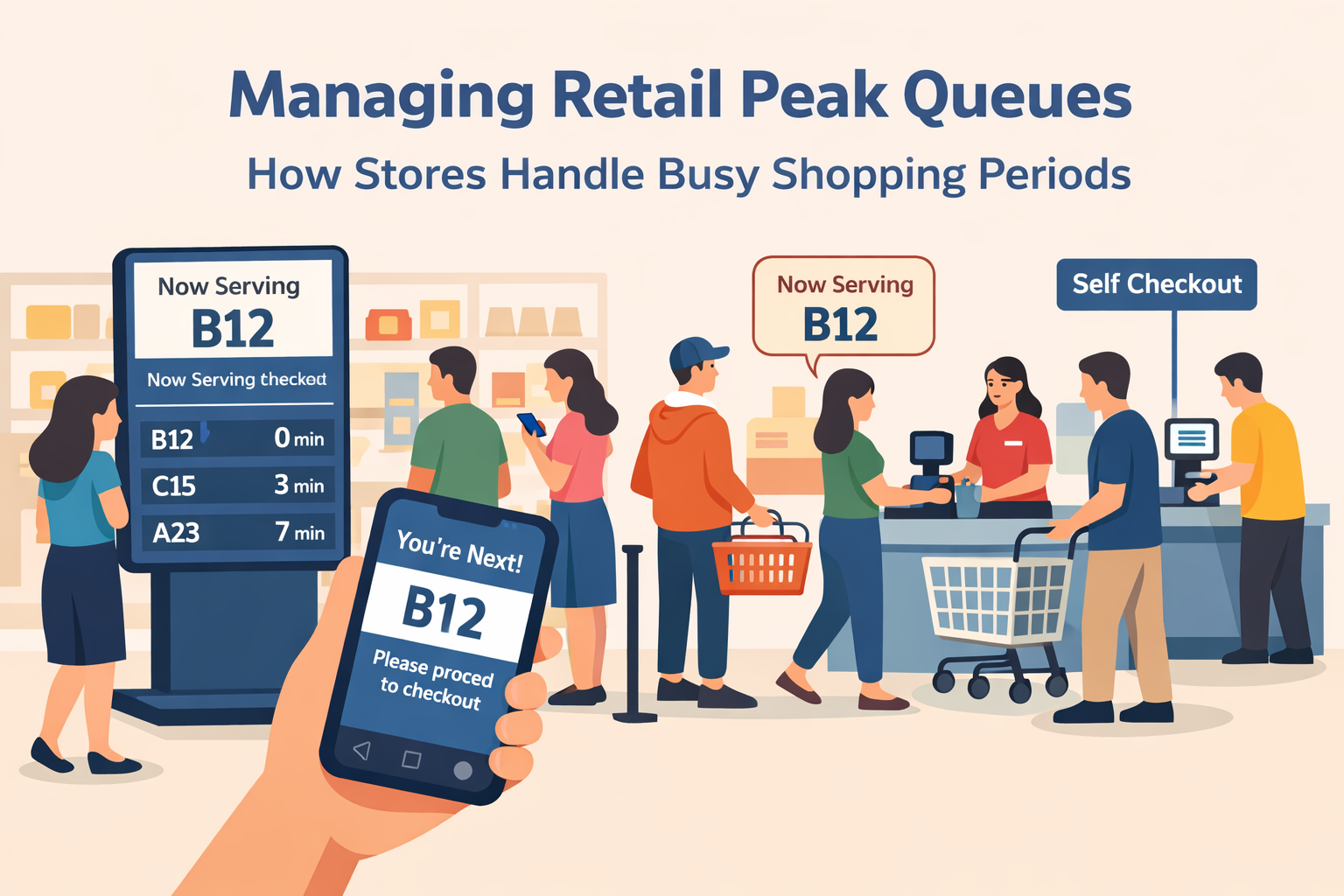
Digital queue management systems allow retailers to organise waiting lines more effectively.
These systems can:
Create structured queues
Notify customers when their turn is approaching
Reduce visible congestion
Improve queue flow
Solutions such as virtual queue systems can remove the physical line entirely.
4. Mobile Queue Systems
Some retailers now use mobile queue management apps where customers can join a queue digitally.
Instead of standing in line, shoppers can:
Continue browsing
Receive alerts when their turn approaches
Return to checkout when ready
This significantly improves the perceived waiting experience.
5. Smart Staffing Models
Retailers often analyse historical data to predict peak periods. To handle these surges effectively, retailers are increasingly using queue management systems for businesses to organise demand and improve flow during busy periods.
This allows them to schedule staff based on demand patterns.
Common strategies include:
Flexible staffing
Peak-hour scheduling
Temporary staff during seasonal peaks
How Queue Management Systems Improve Peak Queue Control
Modern queue management systems help retailers manage busy periods far more effectively than traditional checkout lines. Average wait times increase significantly during peak trading hours.
These systems provide several benefits.
Reduced Visible Queues
Visible lines increase customer anxiety.
Digital queue systems remove the visual stress of waiting by allowing customers to join a queue digitally.
Improved Customer Experience
Customers feel more in control when they know:
Their position in the queue
Estimated waiting time
When they will be served
This transparency reduces frustration.
Better Operational Insights
Retail queue systems also provide valuable data.
Retailers can track:
Average wait times
Peak demand periods
Customer flow patterns
Service performance
This allows businesses to continuously optimise staffing and service processes.
Why Retailers Are Moving Toward Digital Queue Systems
Retail environments are becoming faster and more competitive.
Consumers now expect speed, convenience, and minimal waiting.
As a result, more retailers are adopting digital queue tools to handle peak demand.
Benefits include:
Reduced checkout congestion
Improved customer satisfaction
Higher completed purchases
Better staff efficiency
Queue management systems are increasingly seen as a core part of modern retail operations.
Final Thoughts
Peak queues are an unavoidable part of retail operations, especially during busy shopping periods.
However, poorly managed queues can lead to:
Lost revenue
Frustrated customers
Operational stress
Retailers that proactively manage peak demand — through staffing strategies, self-checkout systems, and digital queue management solutions — can transform the waiting experience.
As retail continues to evolve, effective queue management will remain one of the key factors that separates efficient stores from frustrating ones. If you're looking to reduce wait times and improve store performance, QueueAway offers a powerful queue management system for retail designed to eliminate queues and enhance customer flow.
FAQ
What are peak queues in retail?
Peak queues occur when customer demand exceeds available service capacity, usually during busy shopping periods such as weekends, lunchtime, or holiday sales events.
Why do queues increase during peak retail hours?
Queues grow during peak hours because more customers arrive than the store can serve immediately, especially when checkout capacity is limited.
How do retailers manage busy checkout periods?
Retailers manage peak queues by opening additional checkouts, using self-checkout systems, adjusting staffing schedules, and implementing queue management technology.
What is a retail queue management system?
A retail queue management system is technology that organises customer waiting lines, tracks queue flow, and improves service efficiency during busy periods.
Do long queues affect retail sales?
Yes. Long queues can cause customers to abandon purchases or avoid returning to a store, which directly impacts revenue.