

How Retail Stores Reduce Checkout Wait Times
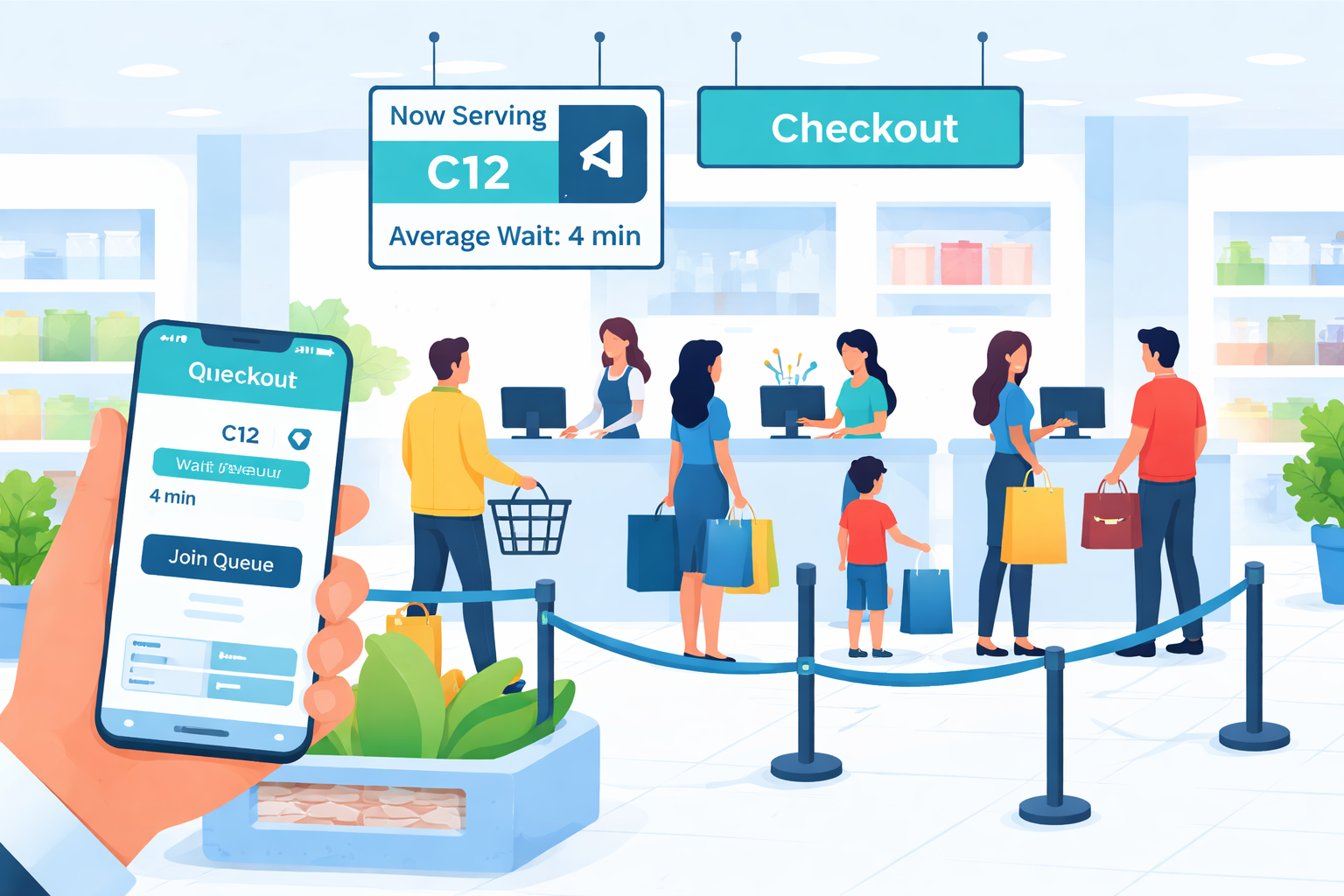
Checkout queues are one of the biggest friction points in retail. Even when customers enjoy the shopping experience, long waits at the checkout can quickly turn satisfaction into frustration.
Retail queue statistic studies consistently show that long checkout lines are one of the top reasons customers abandon purchases. According to multiple retail behaviour studies, many shoppers will leave a store if the checkout line looks too long.
Many retailers are now adopting a queue management system for retail to reduce checkout wait times and improve customer flow during busy periods. staff optimisation, and technology to reduce checkout wait times. As retailers look for ways to improve checkout efficiency, many are turning to a queue management system in the US to better control flow and reduce waiting times.
In this guide we will explore:
Why checkout wait times matter in retail
The psychology of waiting in checkout queues
Proven strategies retailers use to reduce queues
How technology like queue management systems and virtual queues are transforming retail
Why Checkout Wait Times Matter
Retail customers expect speed and convenience.
Long checkout lines can cause several problems:
• Lost sales
• Reduced customer satisfaction
• Negative brand perception
• Staff stress and operational bottlenecks
Studies show that customers often perceive waiting time as longer than it actually is, especially when they cannot see progress in the queue. Average wait times in US retail continue to highlight the scale of the problem.
Retailers that successfully reduce checkout waiting times often see:
Higher customer satisfaction
Increased conversion rates
Improved repeat visits
The Real Cost of Checkout Queues
Queues are not just an inconvenience — they can directly impact revenue.
Retail queue studies suggest that:
Up to 30% of customers have abandoned a purchase due to long checkout queues
Many shoppers will only tolerate 5–10 minutes before leaving
Busy periods such as weekends can dramatically increase wait times
Retailers that fail to manage checkout queues effectively risk losing customers to competitors with faster service. Many retailers are now adopting more advanced queue systems to reduce wait times and improve flow at checkout.
Strategies Retailers Use to Reduce Checkout Wait Times
Retail stores typically use a combination of operational improvements and technology.
Here are the most common approaches.
1. Smart Staffing During Peak Hours
One of the simplest ways to reduce checkout queues is ensuring the correct number of staff are available during busy periods.
Retailers often analyse:
Peak shopping hours
Seasonal demand
Foot traffic patterns
By aligning staff schedules with customer demand, stores can ensure that checkout lanes open quickly when queues begin to build.
However, staffing alone cannot always solve queue issues, particularly during sudden surges in customer traffic.
2. Self-Checkout Systems
Self-checkout has become common in supermarkets and large retail chains.
Benefits include:
Faster throughput for small purchases
Reduced pressure on staffed checkouts
More flexible checkout options
Self-checkout is particularly effective for customers with just a few items.
However, it can also create challenges such as:
Technical issues
Customer confusion
Security concerns
For this reason, many retailers combine self-checkout with traditional checkout lanes.
3. Queue Management Systems
A growing number of retailers are adopting queue management systems to improve customer flow.
Queue management systems allow stores to:
Track wait times
Organise queues efficiently
Manage customer flow during peak times
Improve service speed
Instead of customers forming multiple disorganised lines, queue systems can help retailers implement structured and fair queueing models. These strategies are often powered by a modern queue management system that enables real-time tracking and better staff allocation.
This leads to shorter perceived wait times and a more organised store environment.
Platforms such as QueueAway allow retailers to manage queues digitally, reducing congestion at checkout areas.
4. Virtual Queue Technology
Virtual queues are becoming increasingly popular in modern retail environments.
Instead of physically standing in line, customers can join a digital queue and continue shopping while waiting.
Benefits include:
• Reduced visible queues
• Better customer experience
• More time spent browsing products
• Lower perceived wait times
For retailers, virtual queues also reduce congestion around checkout areas and allow staff to manage demand more effectively.
5. Mobile Checkout and Scan-and-Go
Many retailers are introducing mobile checkout systems.
Customers scan items with their phones and pay digitally without visiting a traditional checkout.
This approach dramatically reduces waiting time and speeds up the purchasing process.
Popular examples include:
Scan-and-Go apps
Mobile POS systems
Staff-assisted mobile checkout
6. Single Queue Systems
One common problem in retail is the multiple-line checkout system, where customers must choose a queue.
This often leads to frustration when one queue moves faster than others.
Many stores now use a single queue feeding multiple checkouts.
Benefits include:
Fairer queueing
Faster throughput
Reduced customer frustration
This system is widely used in banks, airports, and modern retail stores.
7. Real-Time Queue Monitoring
Retail technology can now monitor queues in real time.
This allows managers to:
See when queues start building
Open additional checkouts quickly
Redeploy staff to high-demand areas
Real-time data helps retailers respond to problems before queues become too long. Long checkout queues often lead to queue abandonment in retail, where customers leave before making a purchase. While these strategies can help, understanding what is a queue management system reveals how technology can deliver more consistent and scalable improvements.
The Role of Queue Management Software
Queue management software provides retailers with the tools needed to control waiting times effectively.
Key features often include:
• Digital queue joining
• Wait time estimates
• Queue analytics
• Customer notifications
With these tools, retailers can make data-driven decisions about staffing and service.
Queue management systems like QueueAway help retailers modernise their checkout experience while reducing customer frustration.
The Psychology of Faster Checkouts
Reducing the perception of waiting is just as important as reducing actual wait times.
Retailers often apply psychological techniques such as:
Visible queue progress
Estimated wait times
Engaging checkout environments
Distraction through product displays
These techniques help customers feel that the queue is moving quickly. Data on average wait times in retail shows just how quickly customers become frustrated with queues.
The Future of Retail Checkout
Retail checkout is evolving rapidly.
Future trends include:
• AI-powered queue prediction
• Fully automated checkout systems
• Cashier less stores
• Digital customer flow management
Retailers that invest in modern queue management systems for businesses are likely to gain a competitive advantage by offering faster and more convenient checkout experiences.
Conclusion
Checkout wait times are one of the most critical factors affecting customer satisfaction in retail.
Retailers are reducing queues through:
Smart staffing
Self-checkout technology
Mobile checkout solutions
Queue management systems
Virtual queues
By adopting modern queue management solutions, retailers can transform the checkout experience from a point of frustration into a seamless part of the shopping journey. If you're looking to reduce checkout wait times and improve in-store efficiency, QueueAway offers a powerful queue management system for retail designed to eliminate physical queues and improve customer experience.
FAQ Section
Why do retail stores have long checkout lines?
Retail checkout lines often occur during peak shopping periods when customer demand exceeds the number of available checkout staff.
How long will customers wait in a retail checkout line?
Many retail studies suggest customers will tolerate around 5–10 minutes before becoming frustrated or abandoning their purchase.
How can retail stores reduce checkout queues?
Retailers reduce queues using queue management systems, self-checkout technology, smart staffing strategies, and virtual queues.
What is a queue management system in retail?
A queue management system helps retailers organise waiting lines, monitor wait times, and improve customer flow to reduce congestion.
Do virtual queues work in retail?
Yes. Virtual queues allow customers to join a digital line instead of physically waiting, which reduces congestion and improves customer experience.