

How to Reduce No-Shows in a Barbershop
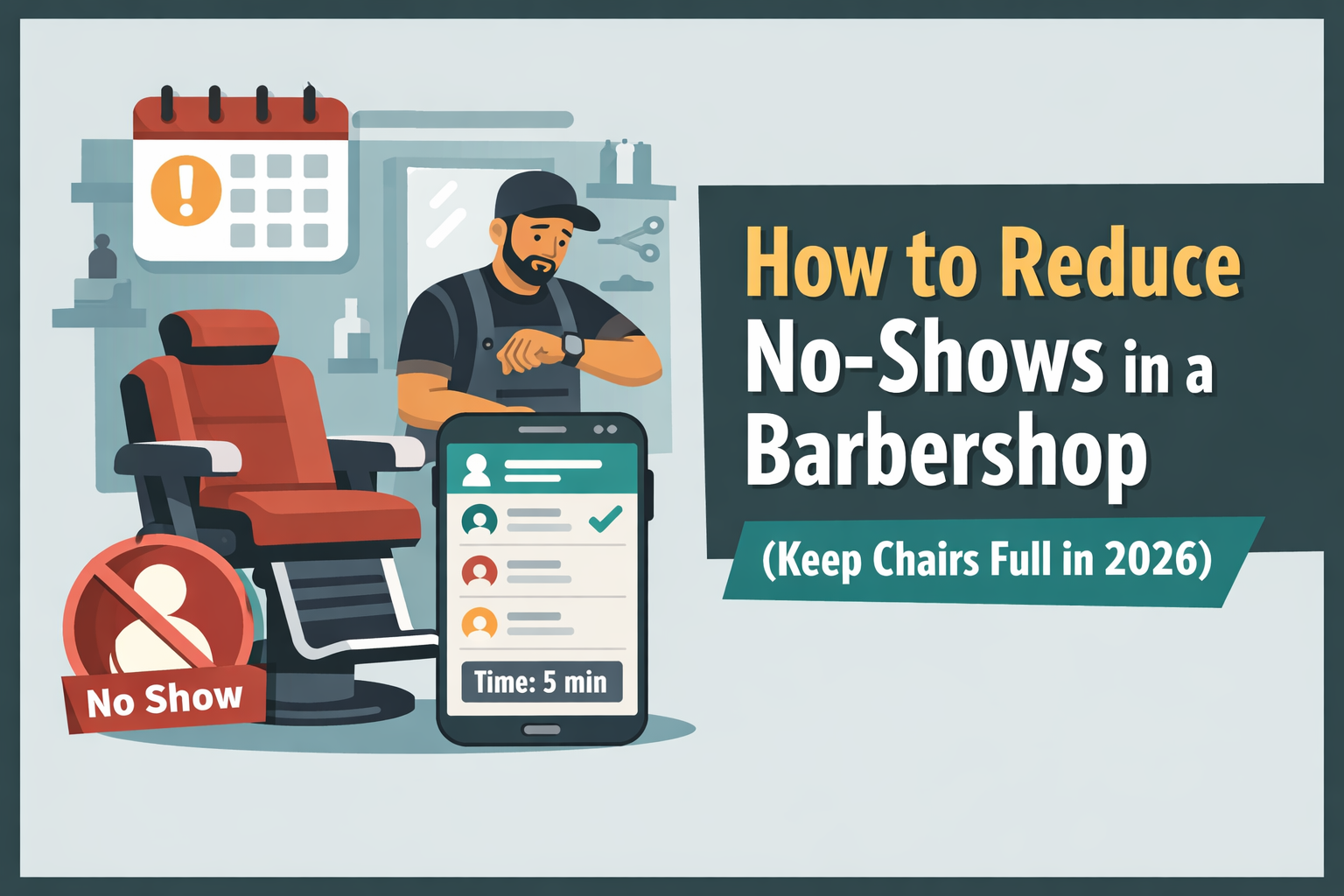
No-shows quietly drain barbershop revenue. A missed appointment here and there doesn't feel catastrophic — until you do the numbers. This guide covers why no-shows happen in barbershops specifically, what the real cost looks like, and the practical systems that actually reduce them.
Why no-shows happen in barbershops
Barbershops are different from salons and clinics. Many operate a hybrid model — taking appointments while staying open to walk-ins, managing peak rushes on Fridays and Saturdays alongside last-minute bookings. That flexibility is part of what makes a great barbershop, but it also creates the conditions for no-shows to multiply.
The most common reasons clients don't show up have little to do with bad intent:
- They forgot — no reminder, no reason to keep it front of mind
- They double-booked without realising
- They assumed they could walk in later and didn't bother cancelling
- The wait looked too long when they arrived so they left without saying anything
- They weren't sure how long the cut would take and ran out of time
In most cases the problem isn't bad customers — it's a lack of queue clarity and communication. When clients feel uncertain, they disappear quietly rather than engaging with the process.
The real cost of barbershop no-shows
Most barbershop owners feel the drain before they ever calculate it. Here's what the numbers look like at a typical UK shop:
For a deeper look at how walk-out behaviour affects revenue, see our guide on walk-in barbershop management challenges.
5 ways to reduce no-shows in a barbershop
-
1Send automated reminders
SMS reminders sent 24 hours and 2 hours before an appointment reduce no-shows by 30–40%. Most clients don't intentionally skip — they forget. A well-timed message removes that friction entirely. It doesn't need to be complicated: the appointment time, the shop name, and a simple cancellation link is enough. Clients who can cancel easily are far less likely to just not show up.
-
2Make cancellation frictionless
Counter-intuitively, making it easier to cancel reduces no-shows rather than increasing them. When a client can cancel with one tap, they do — and you get the slot back in time to fill it. When cancellation is awkward, they go silent. A link in the reminder message, a reply-to-cancel option, or a simple online form all work. The goal is to get the information early, not to trap people into showing up.
-
3Use live queue transparency to keep clients engaged
One of the most overlooked drivers of no-shows in barbershops is queue uncertainty. When a client books or joins a walk-in queue and then has no visibility on their position or wait time, they disengage. They wander off, get distracted, or decide it's not worth it. A barber queue management system that shows live position and estimated wait time keeps clients anchored to the process. They know where they stand — so they stay.
-
4Run a hybrid queue and walk-in model
Pure appointment systems create rigidity that doesn't suit most barbershops. Too much structure breeds frustration — and frustrated clients ghost. A hybrid model, where appointments and walk-ins run alongside each other through a digital queue, gives the shop flexibility without chaos. Clients feel they have options. When a slot opens up unexpectedly, walk-ins can fill it instantly without the gap sitting empty. For a full comparison of approaches, see our guide on digital queues vs booking apps for barbers.
-
5Fill gaps the moment they appear
When a no-show happens, speed determines whether the slot is recovered or lost. A live queue lets you notify the next waiting customer immediately — by SMS or in-app alert — pulling them forward before the gap becomes dead chair time. Without a system, you're relying on whoever happens to be standing nearby. With one, cancellations become recoverable rather than written off.
Why traditional appointment systems fail barbers
Most booking tools were designed for salons or clinics — businesses with a fundamentally different service rhythm. Barbershops have faster service turnover, a high walk-in culture, spike traffic periods, and repeat regulars who expect flexibility. Forcing that into a rigid appointments calendar creates as many problems as it solves.
| System type | Strengths | Weaknesses for barbershops |
|---|---|---|
| Appointments only | Predictable diary, easy to plan | Kills walk-in trade, no-shows leave gaps with no recovery |
| Walk-ins only | Flexible, traditional barbershop feel | No visibility, clients leave when waits look uncertain |
| Digital queue (hybrid) | Handles both streams, live visibility, gap recovery | Requires initial setup and brief staff training |
A system designed for barbershop workflow doesn't just reduce no-shows — it smooths the entire day. For a full breakdown of how queue management affects operations, see our barbershop queue operations guide.
What changes when no-shows come down
The impact isn't just financial. When no-shows drop, the whole shop runs differently. Revenue stabilises and becomes more predictable. Staff stress reduces — barbers aren't constantly managing unexpected gaps or fielding "how long?" questions. Wait times become clearer and more accurate, which improves customer trust. And when clients trust the process, Google reviews follow. Operational confidence builds, and that confidence shows in the atmosphere of the shop.
Busy barbershops that implement structured queue systems consistently see fewer missed appointments, higher daily service counts, less visible crowding, and improved customer satisfaction scores. It's not about stricter deposit policies or punishing clients. It's about building a system that keeps people engaged from the moment they join the queue to the moment they sit in the chair.
Frequently asked questions
A no-show is a client who booked an appointment or joined a queue and then didn't arrive — without cancelling or giving notice. In a barbershop context, it also covers walk-in customers who joined a digital queue and left without checking out. Both result in empty chair time and lost revenue.
Deposits can reduce no-shows for high-value appointments, but they can also deter walk-in and spontaneous bookings — which are core to most barbershops' revenue. A better first step is improving communication: automated reminders, easy cancellation, and live queue visibility reduce no-shows without adding friction to the booking process or putting off new clients.
At an average UK haircut price of £22, losing just 2 no-shows per day across 300 working days amounts to £13,200 in lost revenue annually. The real figure is often higher when you factor in idle staff time, disrupted flow, and walk-in customers who left due to uncertainty about wait times.
A barbershop no-show policy sets out what happens when a client misses an appointment without cancelling. Common approaches include sending a reminder before marking someone as a no-show, requiring a deposit after a first no-show, or limiting future bookings for repeat offenders. The most effective policies combine a clear communication process with easy cancellation options, so clients have every opportunity to let the shop know before simply not turning up.
Yes — particularly for walk-in no-shows, which are harder to address with traditional appointment reminders. A barbershop queue management system keeps clients engaged with their position in real time, notifies them when it's nearly their turn, and alerts them immediately if they need to return to the shop. That live connection significantly reduces the likelihood of clients drifting away and not coming back.
The fastest way is to have a live queue running alongside your appointment system. When a no-show creates a gap, the next person in the walk-in queue can be notified immediately and pulled forward. Without a system, you're relying on whoever happens to be nearby. With one, cancellations and no-shows become recoverable within minutes rather than written off as lost revenue.
Stop writing off no-shows as lost revenue
QueueAway gives barbershops live queue visibility, automated client notifications, and a hybrid walk-in and appointment flow that fills gaps the moment they appear.
See how QueueAway works →