

Barber Queue System: Stop Losing Walk-In Customers
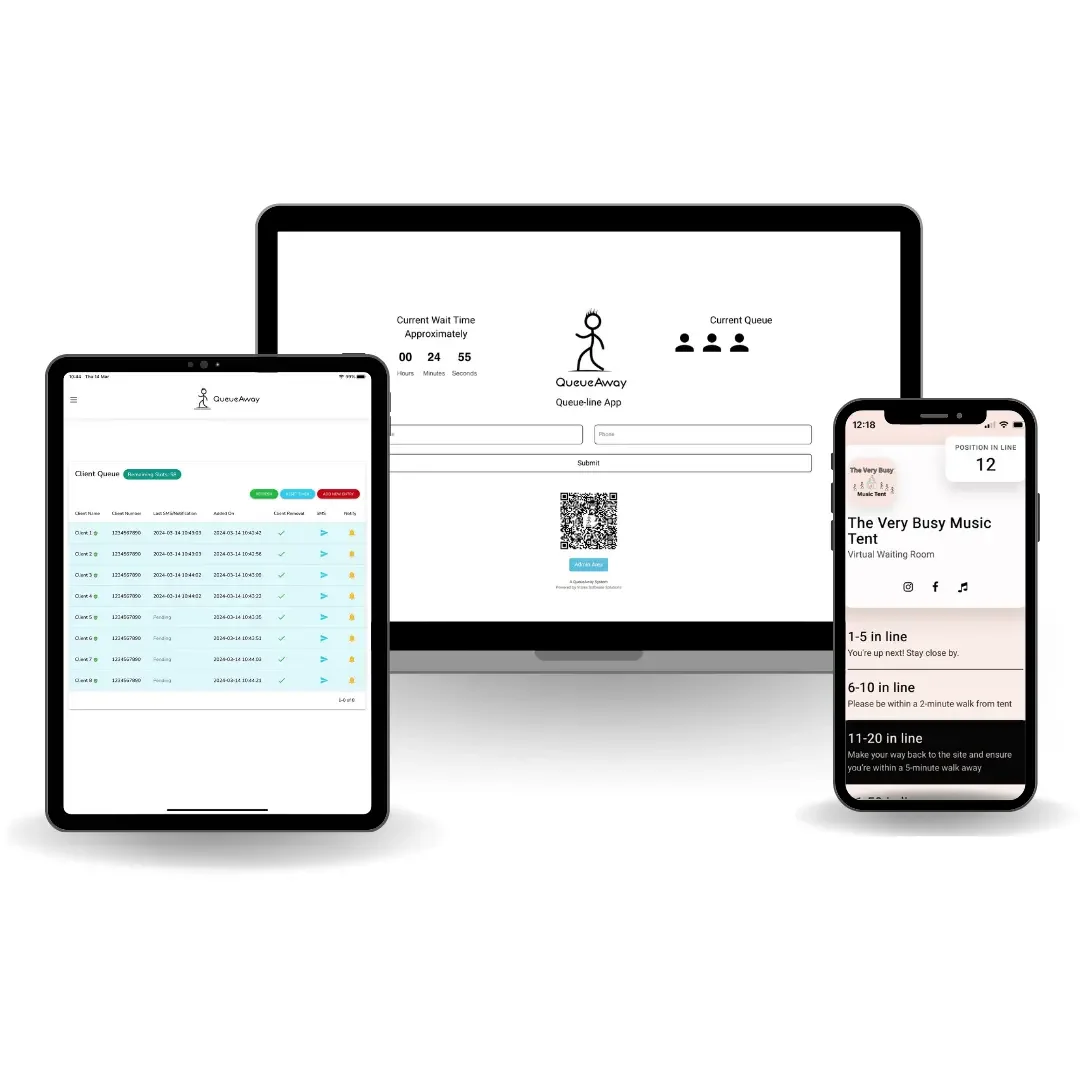
Long queues don't cost barbershops customers — unclear queues do. This guide covers how a barber queue system fixes the problem, what to look for, and why the shops adopting digital queue management are seeing fewer walk-outs and calmer peak hours.
Why barbershop queues break down
Barbershops face a queuing problem that most other businesses don't. Service times vary — a shape-up takes 10 minutes, a full cut and beard could take 45. There's no reservation system telling customers what's ahead. And the shop is small, so when it's busy it looks chaotic even when the actual wait is manageable.
The result is a situation where your shop being busy — which should be a good thing — actively drives customers away. The three systems most barbershops currently use all have the same core flaw:
Whiteboard / paper list
- No wait time estimates
- Customers must stay in the shop
- Looks disorganised when busy
- Staff spend time managing it
Mental tracking
- Works for 2–3 people waiting
- Breaks instantly at peak times
- Creates disputes about order
- Completely invisible to walk-ins
Both systems share the same failure point: they give the customer no information. A new walk-in can't tell whether the wait is 10 minutes or an hour. So many of them leave — silently, without complaint, and without you ever knowing they were there.
What a barber queue system actually does
A barber queue system replaces the invisible, informal queue with a live digital one that both the customer and the barber can see. The mechanic is simple:
- Customer arrives and joins They scan a QR code at the door, tap a link, or use a tablet at the front desk to add themselves to the live queue in seconds — no app download required.
- They see exactly where they stand Their position and estimated wait time are shown in real time. If the wait is 25 minutes, they know. They can grab a coffee, run an errand, or sit nearby.
- They get notified when it's nearly their turn An SMS or in-browser alert tells them to head back. They arrive ready, the barber is ready, and no time is wasted.
- The barber sees the same live view Staff manage the queue from a phone or tablet. Calling the next customer, adjusting order, noting service type — all in one place, no paperwork.
The shop still feels like a barbershop. The culture doesn't change. The waiting experience does.
The direct impact on walk-outs
The mechanism is straightforward. When a customer walks in and can see "you're 4th in the queue, estimated wait 22 minutes," they make an informed decision. Most stay — or leave and come back. When they can see nothing, many leave and don't come back.
Shops using digital queue systems consistently report the same pattern: fewer interruptions for staff ("how long roughly?"), less physical crowding in the waiting area, and a noticeably calmer atmosphere during peak hours. The shop doesn't get less busy — it just looks and feels less chaotic.
For a broader look at the data behind barbershop customer behaviour, see our barbershop statistics roundup.
What to look for in a barbershop queue system
Not every queue system is built for barbershop environments. Enterprise solutions designed for hospitals or banks tend to be overcomplicated, require hardware, and don't account for the informal nature of walk-in flow. Look for these specifically:
For a full comparison of queue systems and booking apps, see our guide on digital queues vs booking apps for barbershops. If you're evaluating specific options, our roundup of the best barbershop queue apps covers the main players.
Queue management and barbershop operations
Beyond walk-out reduction, a structured queue system changes how the whole day runs. Barbers know what's coming next. There's a clear, fair order that nobody disputes. Staff spend less time answering "how long?" and more time cutting. The waiting area is calmer because fewer people are physically sitting in it at once.
For multi-location barbershops, the operational benefit is even greater. A centralised queue view across locations shows which chair is backed up and which site has capacity — useful data for scheduling and staffing decisions that most barbershops currently have no visibility into.
For a deeper look at how queue management affects day-to-day operations, including peak-hour planning and staff workflow, see our barbershop operations guide.
If you're also thinking about the walk-in vs appointments question more broadly — whether to run a hybrid model, what the data says about customer preference, and how 2026 trends are shaping barbershop client flow — our walk-in vs appointments guide covers it in full.
Frequently asked questions
A barber queue system is software that manages the flow of walk-in customers at a barbershop. Instead of customers physically waiting in a chair, they join a digital queue via a QR code or tablet, see their estimated wait time, and receive a notification when their turn is near. This reduces visible crowding, prevents walk-outs, and gives barbers a clear view of who is next.
A customer walks in or arrives nearby, scans a QR code or taps a link, and joins the live queue from their phone. They can see their position and estimated wait time in real time, leave to grab a coffee if they want, and return when they're near the top. The barber sees the same live queue on their tablet or phone and calls the next customer when ready.
Walk-in customers leave because the wait feels unclear, not necessarily because it is too long. When a new customer walks in and cannot tell whether the wait is 10 minutes or 45 minutes, many choose to leave rather than risk it. A digital queue system solves this by showing customers exactly where they are in line and how long they are likely to wait.
The best queue system for a barbershop is one designed specifically for walk-in flow rather than appointment booking. It should show live wait times, allow customers to join remotely via QR code or link, send notifications when their turn is near, and be simple enough for staff to manage between cuts without any extra hardware. See our full comparison of the top options.
Yes. The best barbershop queue systems handle walk-ins and booked appointments in parallel, with both streams visible to staff in a single view. Walk-in customers join the live queue while appointment customers are slotted in separately, so neither group disrupts the other. See our walk-in vs appointments guide for a full breakdown of how hybrid models work.
No. Most modern barber queue systems, including QueueAway, work entirely through a browser link or QR code scan. Customers do not need to download anything — they simply open a link on their phone, enter their name, and join the queue instantly.
For customers, a digital queue removes the uncertainty of waiting and lets them use their time elsewhere. For barbers, it eliminates constant interruptions from people asking "how long?" and gives a clear, fair order to follow throughout the day. It also reduces the stress of managing a physically crowded shop during peak hours.
Ready to stop losing walk-ins silently?
QueueAway is a barber queue system built specifically for walk-in flow. Customers join by QR code, see their wait time, and get notified when they're up — no app download, no appointments calendar, no hardware.
See how QueueAway works →