

Hotel Queue Management: How to Reduce Check-In Wait Times
Introduction: The Hidden Cost of Hotel Check-In Queues
In hospitality, first impressions are everything. Many hotels are now adopting a queue management system for hospitality to reduce check-in congestion and improve guest flow from arrival.
Yet one of the most common friction points across hotels worldwide is still the check-in queue.
After a long journey, guests don’t want to stand in line — they want to relax, check in quickly, and start their stay.
But during peak hours, hotels often face:
Long queues at reception
Overwhelmed staff
Frustrated guests
Negative reviews before the stay even begins
According to industry data:
73% of guests say waiting impacts their overall hotel experience
Over 60% expect check-in to take less than 5 minutes
Queue frustration is one of the top 5 causes of poor reviews
This is where a hotel queue management system becomes essential.
Why Hotel Check-In Queues Still Exist
Even modern hotels struggle with queues due to:
1. Peak Arrival Times
Check-in windows (2pm–6pm) create bottlenecks
Flights, events, and group bookings amplify demand
2. Manual Processes
ID checks
Payment handling
Room allocation delays
3. Staffing Limitations
Difficult to scale staff dynamically
Overstaffing = cost
Understaffing = queues
The Impact of Long Check-In Queues
Queues don’t just annoy guests — they cost money. The growing importance of queue management in hospitality is driven by rising guest expectations for speed, convenience, and digital-first experiences.
Key Impacts:
Lower guest satisfaction scores
Increased negative reviews
Higher staff stress
Reduced upsell opportunities
Poor first impression → affects entire stay
A bad check-in experience can reduce repeat bookings significantly. The psychology of waiting in hospitality shows that perceived wait time matters more than actual time, making virtual queues especially effective.
What Is a Hotel Queue Management System?
A hotel queue management system allows guests to:
Join a queue digitally
Check in via mobile
Receive real-time updates
Be notified when it’s their turn
Instead of standing in line, guests can:
✔ Sit in the lobby
✔ Visit the bar
✔ Relax after travel
Statistics: Queue Management in Hospitality
Hotels implementing digital queues see up to 40% reduction in perceived wait times
Guest satisfaction scores increase by 20–30%
Staff efficiency improves by 25%+
Queue abandonment (guests leaving frustrated) drops significantly
These are not just operational improvements — they directly impact revenue. Recent hospitality queue statistics highlight how long check-in delays directly impact guest satisfaction and online reviews.
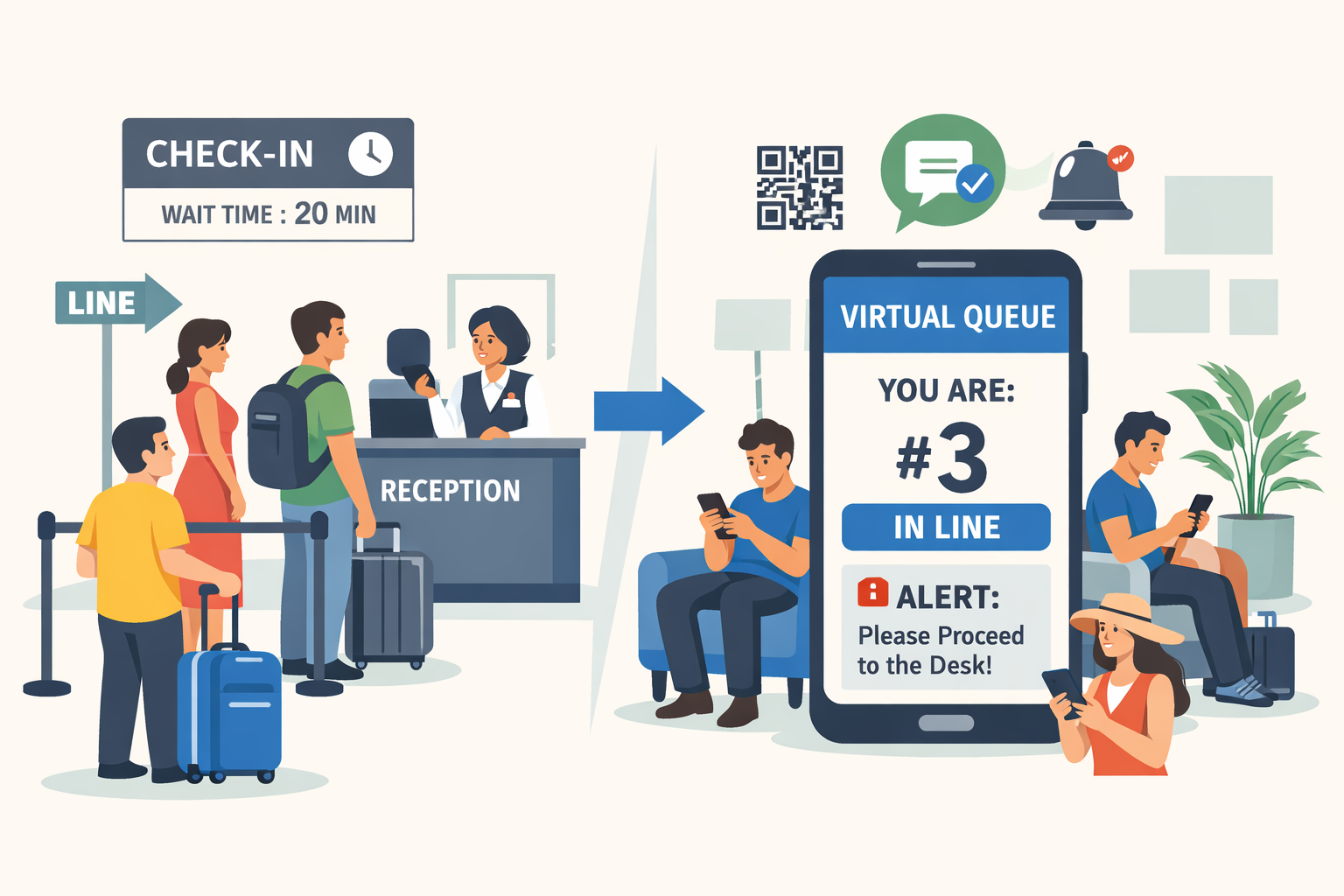
How Virtual Queues Transform Hotel Check-In
Before (Traditional Queue)
Guests arrive → join line → wait
No visibility of wait time
Stress builds quickly
After (Virtual Queue System)
Guest joins queue via QR or link
Sees estimated wait time
Gets notified when ready
Walks straight to reception
Same process — completely different experience.
Use Case: Busy City Hotel
A hotel experiencing peak check-in congestion implemented a virtual queue app
Results:
Average wait reduced from 18 minutes → 6 minutes
Guest complaints dropped by 35%
Staff reported lower stress levels
Bar revenue increased (guests waited elsewhere instead of standing in line)
Similar solutions are already transforming dining experiences through restaurant waitlist systems that allow guests to wait virtually instead of standing in line.
Internal Linking
Add these naturally in your CMS
Link to:
/queue-management-system-for-hospitality
Anchor: queue management system for hospitalityLink to:
/virtual-queue-app
Anchor: virtual queue appLink to (future / existing blogs):
how restaurants reduce waiting times
event queue management systems
Key Features to Look For
A modern hotel queue system should include:
QR code check-in
SMS notifications
Live queue tracking
Staff dashboard
Multi-location support
Analytics & reporting
Why Hotels Are Moving to Digital Queues in 2026
Hospitality is shifting toward:
Contactless experiences
Faster service expectations
Tech-driven guest journeys
Guests already use:
Mobile check-in
Digital room keys
Online booking
Queue management is the next step.
ROI: Why It Makes Business Sense
Benefits:
Faster guest throughput
Higher satisfaction → better reviews
Increased upsell opportunities
Better staff utilisation
Even a small reduction in wait time can significantly increase lifetime customer value.
Final Thoughts
Hotel queues are no longer just an inconvenience — they’re a competitive disadvantage.
Hotels that embrace queue management systems:
Deliver better guest experiences
Operate more efficiently
Generate more revenue
And most importantly — they remove friction at the most critical moment: arrival.
FAQ SECTION
What is a hotel queue management system?
A hotel queue management system allows guests to join a queue digitally instead of waiting in line, improving efficiency and guest experience.
How can hotels reduce check-in wait times?
Hotels can reduce wait times by using virtual queues, mobile check-in, and better staff allocation during peak periods.
Do virtual queues improve guest satisfaction?
Yes, virtual queues reduce perceived waiting time and significantly improve guest satisfaction scores.
What is the average hotel check-in wait time?
Typical wait times range from 5 to 20 minutes depending on hotel size and peak demand.
Are queue systems expensive for hotels?
Most modern systems are cost-effective and provide strong ROI through efficiency and improved guest experience.