

Reducing Wait Times in Hospitality: The Complete 2026 Guide
In hospitality, waiting is one of the fastest ways to lose customers.
Whether it’s:
Guests waiting to be seated
Customers queuing at reception
Visitors stuck at event entry points
Long waits don’t just frustrate people — they directly impact revenue, reviews, and repeat business.
In this guide, we break down:
Why wait times matter
Real hospitality statistics
Proven strategies to reduce queues
How modern queue management systems transform guest flow
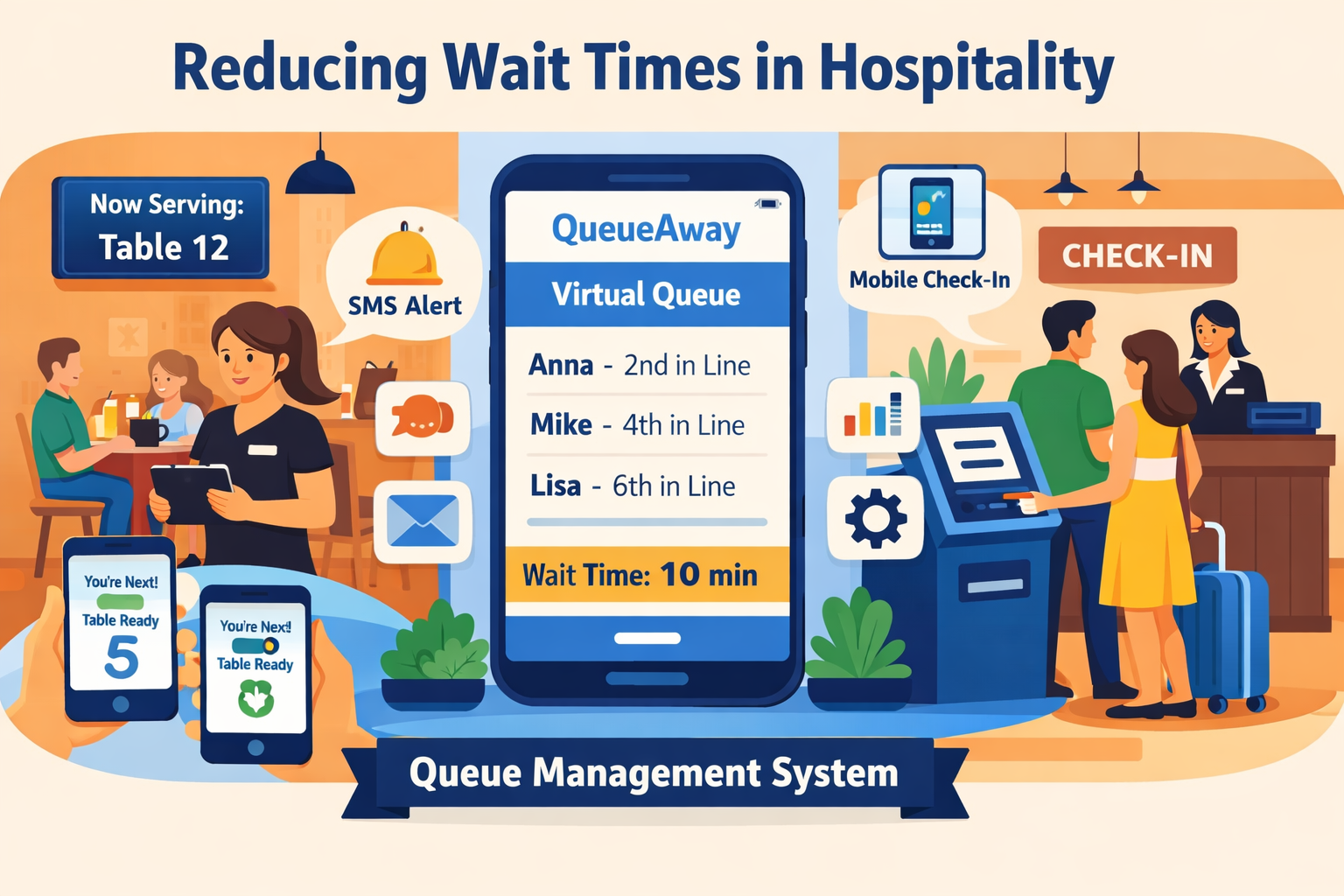
Many businesses are now adopting a hospitality queue management system to reduce wait times, improve guest flow, and create a smoother customer experience.
A modern queue management system gives businesses real-time visibility into demand, helping reduce delays and improve service efficiency.
A virtual queue system allows guests to join a line remotely, reducing physical congestion while improving the overall experience.
The Reality of Waiting in Hospitality (2026 Data)
Research consistently shows that wait times directly affect customer behaviour:
70% of guests say long waits reduce satisfaction
30–40% of customers will leave if wait times are too long
1 in 3 negative reviews mention waiting
Lost revenue from queues can exceed 15% during peak times
Hospitality Insight:
Unlike retail, hospitality is experience-driven — meaning delays feel longer and more frustrating. Understanding queue management in hospitality is essential for businesses looking to reduce wait times and improve guest satisfaction.
Why Waiting Feels Worse in Hospitality
Waiting isn’t just about time — it’s about perception.
Key Psychological Triggers:
Uncertainty (“How long will this take?”)
Lack of control
No visible progress
Crowded environments
This is why a 10-minute wait can feel like 30 minutes if unmanaged. The psychology of waiting plays a major role in how guests perceive delays, making communication and visibility critical.
The Psychology Fix: Visibility & Control
Businesses that reduce perceived wait times focus on:
Clear communication
Visible progress
Giving guests freedom during the wait
This is where modern queue systems excel.
Strategy 1: Replace Physical Queues with Virtual Queues
Traditional queues:
Create crowding
Increase frustration
Reduce spending time
Virtual queues allow guests to:
Join via phone or QR code
Leave the line physically
Return when called
Result:
Less stress
More spending time
Better experience
Strategy 2: Digital Waitlists for Restaurants
Restaurants using digital waitlists see:
Faster table turnover
Reduced host pressure
Fewer walkaways
Instead of:
“It’ll be about 20 minutes…”
Guests receive:
Live updates
SMS notifications
Accurate wait estimates
Strategy 3: Streamline Hotel Check-In
Hotel queues are a major friction point.
Solutions:
Mobile check-in
Self-service kiosks
Queue management systems
Impact:
Reduced lobby congestion
Faster check-in times
Improved first impressions
Strategy 4: Manage Event Entry & Peak Surges
Events and venues face extreme peak demand.
Without queue management:
Long entry lines
Security bottlenecks
Poor first impressions
With smart queue systems:
Staggered arrivals
Digital ticket queues
Real-time capacity control
Strategy 5: Use Data to Predict & Reduce Wait Times
Modern systems provide insights like:
Peak hours
Average wait times
Staff performance
Queue abandonment rates
Businesses using data can:
Adjust staffing
Reduce bottlenecks
Optimise layouts
Before vs After Queue Management
Metric
Average Wait Time
Walkaways
Customer Satisfaction
Staff Stress
Before
20 mins
High
Low
High
After
8–12 mins
Reduced by 30%+
Significantly higher
Reduced
Real Example: Restaurant Transformation
A busy restaurant experiencing:
25-minute waits
High walkaways
Negative reviews
After implementing a queue management system:
Wait times reduced to ~12 minutes
Walkaways dropped by 35%
Reviews improved significantly
A well-designed customer queue management system can be adapted across industries, including hospitality and retail.
Why QueueAway Fits Hospitality Perfectly
QueueAway helps hospitality businesses:
Eliminate physical queues
Improve guest flow
Reduce wait times
Increase customer satisfaction
Perfect for:
Restaurants
Hotels
Events
Venues
Conclusion
Reducing wait times in hospitality isn’t just operational — it’s experiential and financial.
Businesses that:
Manage queues effectively
Communicate clearly
Use virtual systems
…will outperform competitors in both customer satisfaction and revenue. Many businesses are moving away from traditional lines after understanding the benefits of virtual queues vs physical lines.
FAQ Section
What is the best way to reduce wait times in restaurants?
Using digital waitlists and virtual queue systems allows guests to join remotely and reduces physical crowding.
How do hotels reduce check-in queues?
Hotels use mobile check-in, kiosks, and queue management systems to streamline guest arrival.
Do virtual queues work in hospitality?
Yes — they reduce perceived wait times, improve satisfaction, and increase spending.
Why do customers leave queues?
Customers leave due to long waits, uncertainty, and lack of communication.