

How Queue Management Systems Increase Revenue in Hospitality
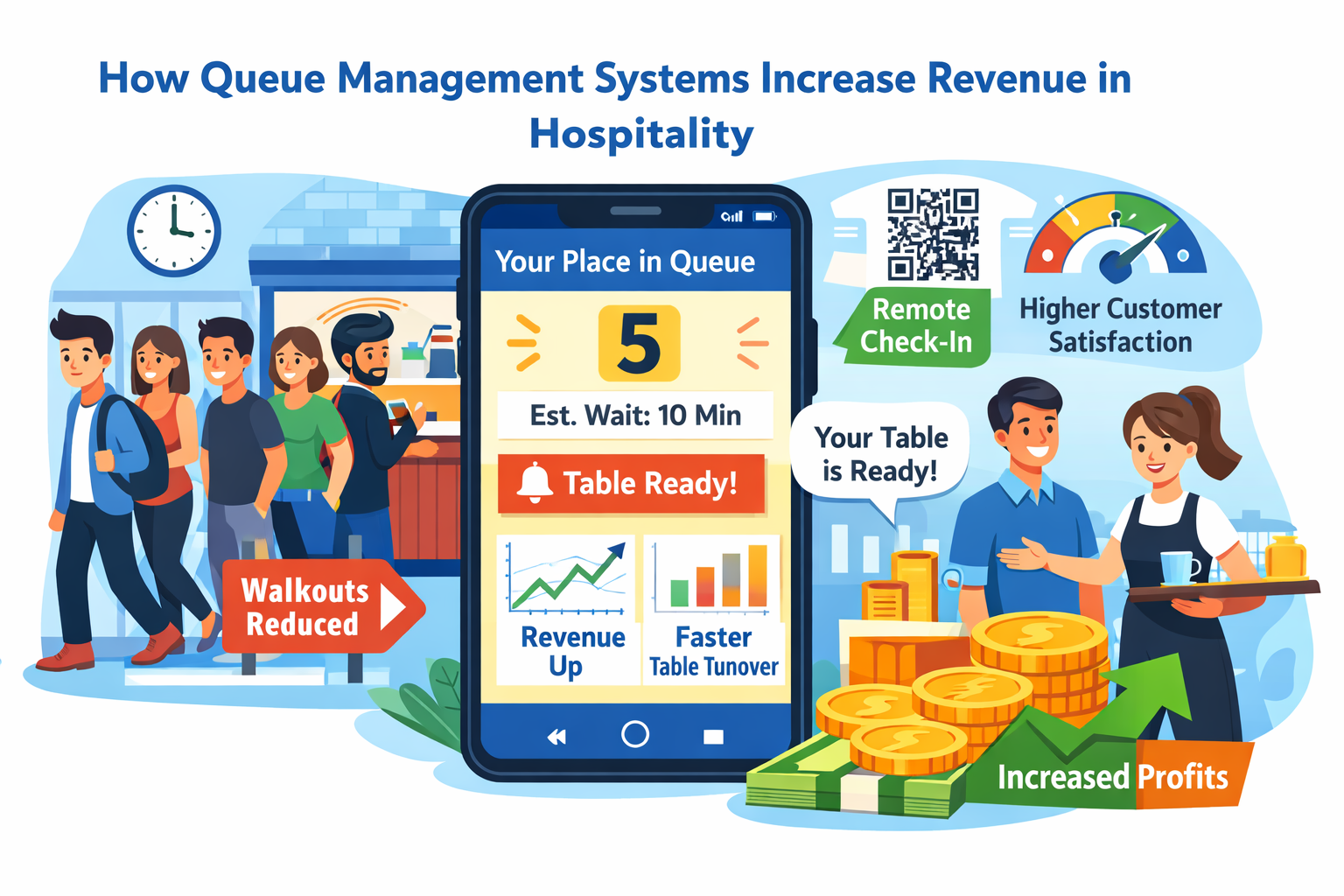
In hospitality, every minute matters.
Whether it's a busy restaurant, hotel check-in desk, or event venue, long queues don’t just frustrate customers — they directly impact revenue.
Customers leave. Tables sit empty. Staff become overwhelmed. And opportunities are lost.
A queue management system changes that completely.
It transforms waiting from a bottleneck into a controlled, optimised part of the customer journey — and in doing so, it unlocks significant revenue growth.
Many businesses are now turning to queue management systems for hospitality to better control demand and improve the overall guest experience.
The Hidden Cost of Poor Queue Management
Many hospitality businesses underestimate how much queues are costing them.
Key revenue losses from queues:
Walkouts (customers leaving before service)
Reduced table turnover
Underutilised capacity
Negative reviews impacting future bookings
Staff inefficiency during peak periods
The reality:
70% of customers will leave if wait times are too long
Customer satisfaction drops sharply after 15–20 minutes of waiting
One negative experience can stop repeat visits entirely
Queues aren’t just operational problems — they’re revenue leaks. Recent hospitality queue statistics show just how quickly long wait times lead to lost customers.
Walkouts = Lost Revenue
One of the biggest financial impacts comes from customers simply walking away.
When customers:
Don’t know how long they’ll wait
Feel ignored
See a crowded entrance
They leave. Many restaurants are now turning to a restaurant waitlist management system to reduce walkouts and better manage peak demand.
Example:
If a restaurant loses:
10 customers per evening
Average spend: £25
That’s:
➡ £250 per day lost
➡ £7,500 per month
A queue management system reduces this by:
Providing accurate wait times
Allowing remote queueing
Sending real-time updates
Faster Table Turnover = More Covers
Efficient queue management leads directly to higher table utilisation.
Without a system:
Tables sit empty while staff organise seating
Customers arrive unevenly
Peak times become chaotic
With a system:
Guests are pre-queued
Tables are filled immediately
Flow becomes predictable
Impact:
More covers per hour
Reduced idle time
Higher daily revenue
Even a 10–15% increase in turnover can significantly boost profits.
Remote Queueing Increases Conversion
Modern customers expect convenience.
Queue management systems allow customers to:
Join a queue via QR code
Check wait times remotely
Receive notifications when ready
Why this matters:
Customers are far more likely to stay in a queue if they:
Can leave the physical space
Feel informed
Have control over their time
➡ This directly reduces abandonment and increases conversion. Understanding how long guests are willing to wait is key to reducing abandonment.
Better Experience = More Repeat Business
Revenue isn’t just about today — it’s about lifetime value.
Long waits create:
Frustration
Negative reviews
Lost loyalty
Queue systems create:
Transparency
Fairness
Control
Result:
Higher satisfaction
More repeat visits
Increased word-of-mouth referrals
In hospitality, experience is everything — and queues are a huge part of that experience. The most effective way to increase revenue is by reducing wait times and improving flow.
Staff Efficiency Improves
Queues don’t just impact customers — they affect staff performance.
Without a system:
Staff constantly manage queues manually
Communication breaks down
Stress levels increase
With a system:
Queue status is visible instantly
Seating is organised
Staff focus on service, not admin
Outcome:
Faster service
Better customer interaction
Higher overall productivity
Real Revenue Impact (Example)
Let’s break it down:
Before Queue System:
100 customers/day
Average spend: £25
15% walkout rate
➡ Revenue: £2,125/day
After Queue System:
Walkouts reduced to 5%
Faster turnover (+10%)
➡ 110 customers/day
➡ Revenue: £2,612/day
Increase:
➡ +£487 per day
➡ +£14,610 per month
This is the real impact of optimised queue management. Many venues now rely on a restaurant waitlist system to manage demand and reduce walkouts.
Data-Driven Decisions
Queue management systems also provide valuable insights:
Peak demand times
Average wait times
Customer behaviour patterns
Staffing optimisation data
This allows businesses to:
Adjust staffing levels
Improve scheduling
Maximise efficiency
Data turns guesswork into strategy.
Final Thoughts
Queue management systems aren’t just about organisation — they’re about unlocking revenue potential.
By reducing walkouts, increasing turnover, and improving customer experience, they directly impact the bottom line.
In a competitive hospitality market, businesses that optimise their queues will always outperform those that don’t. Investing in modern hospitality queue management solutions allows businesses to reduce walkouts, increase efficiency, and maximise revenue potential.
FAQ
How do queues affect restaurant revenue?
Queues affect revenue by increasing walkouts, reducing table turnover, and creating negative customer experiences that prevent repeat visits.
Can queue management systems really increase profits?
Yes, by reducing customer abandonment and improving operational efficiency, queue systems can significantly increase daily and monthly revenue.
What is the biggest revenue loss caused by queues?
The biggest loss comes from customers leaving before being served, especially during peak times.
Do virtual queues increase customer retention?
Yes, virtual queues improve retention by allowing customers to wait remotely and stay informed about wait times.
How much revenue can a queue system add?
Depending on the business, queue systems can increase revenue by 10–30% through better efficiency and reduced walkouts.